
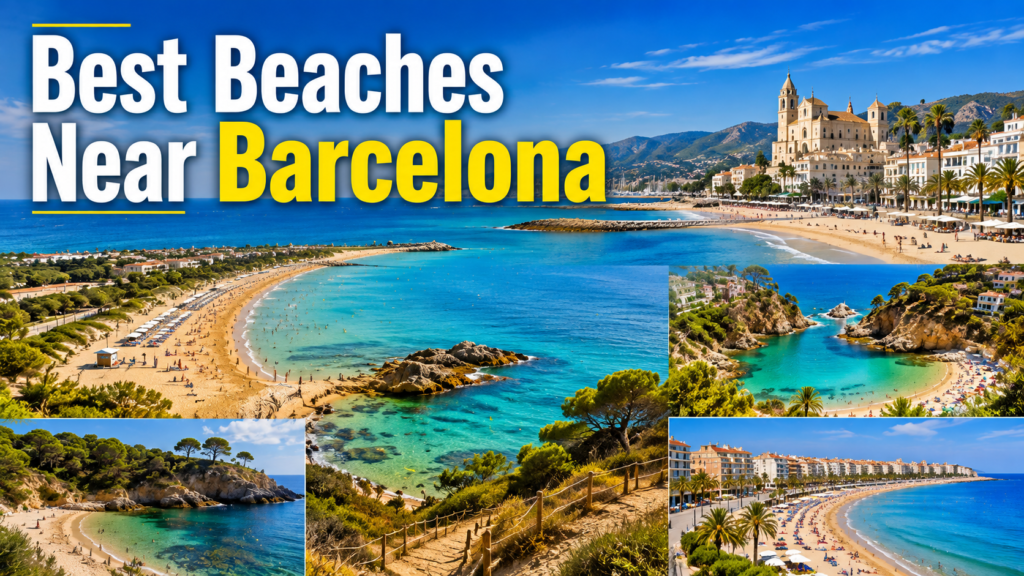

Barcelona is famous for combining city sightseeing with Mediterranean beaches, but some of the most enjoyable stretches of sand are outside the city itself. Travelling a short distance along the Catalan coast can take you from busy urban waterfronts to broad sandy beaches, small fishing villages and dramatic Costa Brava coves.
The key is understanding that there is no single best beach for every traveller. Castelldefels is particularly practical for a spacious beach day, Sitges combines seaside time with a beautiful town, while places such as Garraf offer a smaller and more scenic setting. For travellers willing to travel farther, the Costa Brava provides more dramatic coves and turquoise water.
The R2 South railway corridor connects Barcelona with destinations including Castelldefels, Garraf, Sitges and Vilanova i la Geltrú, making several of the southern beaches particularly convenient without a car.
Best Beaches Near Barcelona at a Glance
| Beach | Best for | Approximate journey | Character |
|---|---|---|---|
| Castelldefels | Families and space | Short train trip | Long, sandy and spacious |
| Sitges | Beach + culture | Short train trip | Lively and picturesque |
| Garraf | Scenery and quiet | Train | Small fishing village setting |
| Vilanova i la Geltrú | Less concentrated tourism | Train | Broad beaches and local atmosphere |
| Caldes d’Estrac | Northern day trip | Train | Small coastal down feel |
| Tossa de Mar | Scenery and history | Longer trip | Dramatic coast and medieval setting |
| Aiguablava | Clear water and coves | Longer trip | Scenic Costa Brava bay |
This distinction matters. Near Barcelona can mean a beach reachable quickly by public transport, while some spectacular Costa Brava destinations require a substantially longer journey and are better suited to an early start or overnight stay.
Castelldefels Beach
For travellers who want a straightforward beach day without spending hours travelling, Castelldefels is one of the strongest choices.
Located about 18 km south of Barcelona, Castelldefels has a remarkably broad coastline. The local tourism authority describes the beach as approximately 4,840 metres long, with an average width of around 100 metres. It is divided into La Pineda, Lluminetes and Baixador sections.
That amount of space is a major advantage compared with smaller urban beaches. There is room for swimming, sunbathing, walking and beach sports without the experience feeling confined.
Best for: families, groups, sunbathing, beach walks and travellers prioritising convenience.
The beach is also particularly useful if you do not want to hire a car. Castelldefels is served by the R2 railway network from Barcelona.
Sitges Beaches
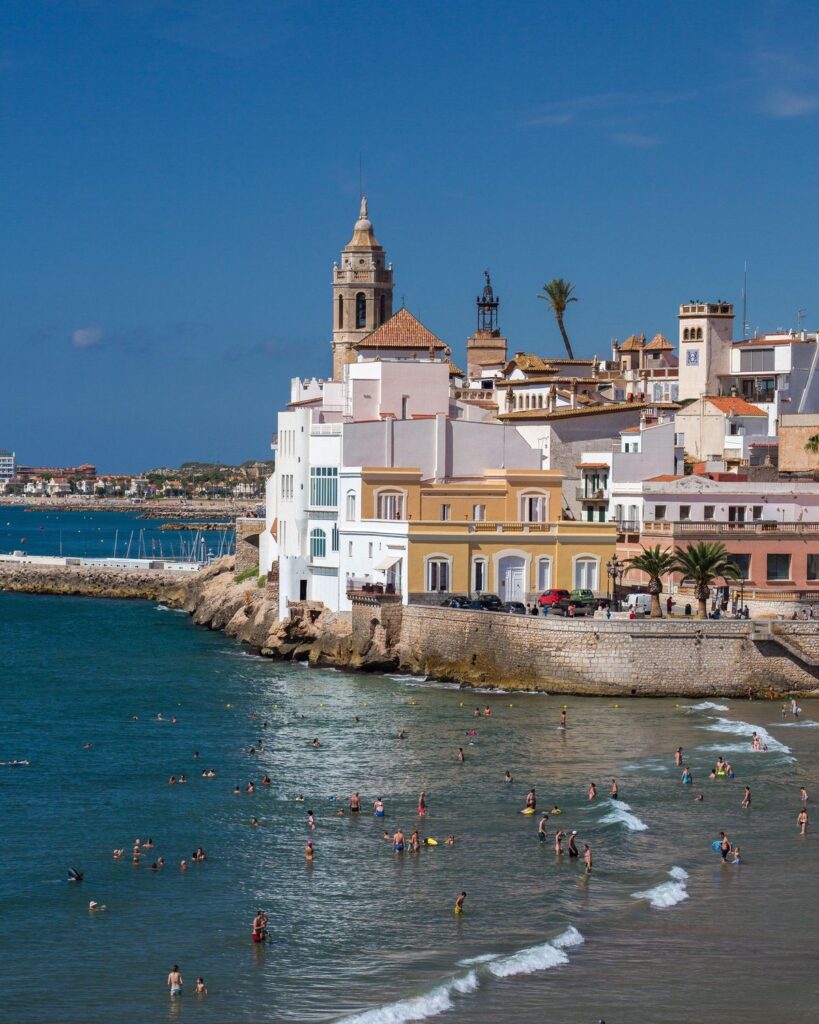
If Castelldefels is primarily about the beach, Sitges is about the complete coastal experience.
Sitges has multiple beaches around its waterfront, including Sant Sebastià, Fragata, Aiguadolç, Balmins and Terramar. The town’s official tourism information also highlights different beach experiences, from family oriented urban beaches to smaller coves and beaches associated with sports or LGBTIQ+ culture.
The biggest advantage is what happens after swimming. You can leave the beach and walk through Sitges’ historic streets, stop for lunch, explore the waterfront or spend the afternoon in cafés.
For travellers who want a destination rather than simply a patch of sand, Sitges is arguably the most balanced choice.
Best for: couples, first time visitors, food lovers, beach and culture trips and travellers who enjoy lively coastal towns.
Sitges is also connected to Barcelona by the R2 South railway line.
Garraf Beach
Garraf offers a completely different atmosphere.
Instead of the long, open shoreline of Castelldefels or the larger collection of beaches around Sitges, Garraf has a much smaller coastal setting associated with a historic fishing community. The distinctive beach huts are among its most recognisable features.
Sitges tourism information lists Garraf among the beaches and coves along this section of the coast, alongside Cala Ginesta, Cala Morisca and Vallcarca.
Because the beach is smaller, it is worth choosing Garraf for its character and scenery rather than expecting a huge expanse of sand.
Best for: photographers, couples, short coastal escapes and travellers who prefer village atmosphere over resort style beaches.
It is also on the R2 South route, although current railway works can affect services farther along the line, so checking the latest timetable before travelling is sensible.
Vilanova i la Geltrú
Vilanova i la Geltrú is an excellent option for travellers who want a longer beach day with a somewhat less concentrated tourist feel than central Sitges.
The town sits farther south along the same rail corridor and combines beaches with a functioning Catalan coastal town. This makes it useful for visitors who enjoy mixing swimming with lunch, walking and exploring local streets.
It is particularly worth considering if your priority is space and a more everyday seaside town atmosphere rather than postcard style architecture.
Vilanova i la Geltrú is also directly served by the R2 South railway line, making it practical for visitors travelling without a rental car.
Best for: longer beach days, families, independent travellers and visitors wanting an alternative to Sitges.
Caldes d’Estrac and the Maresme Coast
Barcelona’s northern coastline provides another group of beaches worth considering, particularly if you have already visited the southern beaches.
Caldes d’Estrac, often called Caldetes, has a smaller coastal setting and a more traditional seaside town character. Other Maresme destinations, including Calella and Sant Pol de Mar, provide additional choices for travellers prepared to travel farther north.
The main difference from the Garraf coast is the experience. The southern route towards Sitges is ideal for combining beaches with the Garraf landscape and coastal towns, while the Maresme route offers a different succession of seaside communities along the northeastern side of Barcelona.
Best for: repeat visitors, quieter alternatives and travellers exploring beyond the most obvious Barcelona day trips.
Costa Brava Beaches Worth the Longer Trip
If your definition of “near Barcelona” stretches to a longer day trip, the Costa Brava opens up a much more dramatic type of coastline.
Tossa de Mar
Tossa de Mar is one of the strongest choices for travellers who want scenery and history alongside swimming. Its combination of Mediterranean coastline and medieval old town character makes it more than a conventional beach destination.
However, it is important not to describe Tossa as equivalent to Castelldefels in terms of convenience. The journey is considerably longer, so it is better suited to travellers who are comfortable dedicating most of a day to the excursion.
Aiguablava
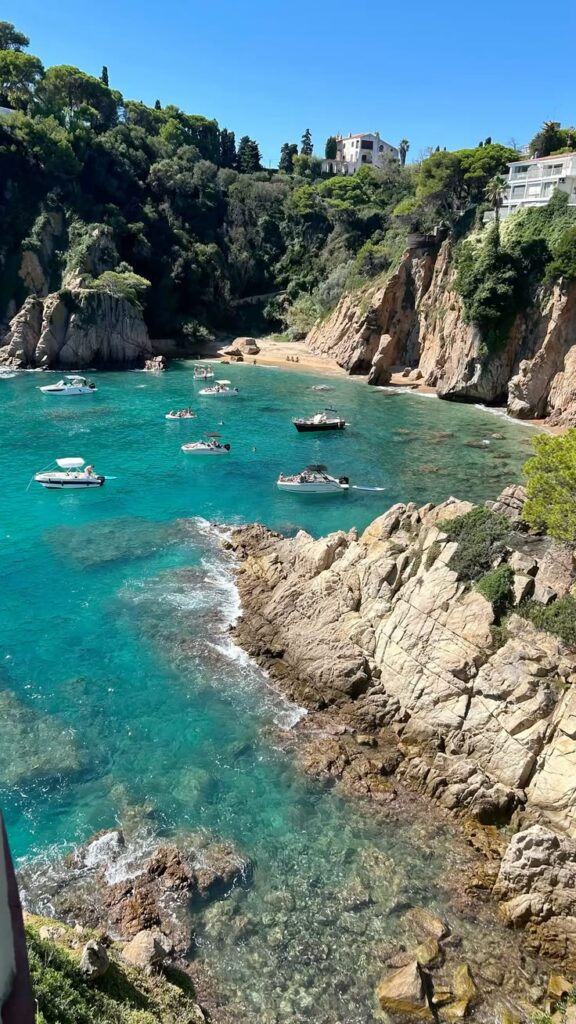
Aiguablava near Begur is a better choice for travellers specifically searching for a beautiful Mediterranean cove rather than the easiest beach from Barcelona.
The official Costa Brava tourism site describes Aiguablava as a fine sand beach with shallow, calm water and services including adapted facilities and water sports.
Its setting is the attraction: cliffs, clear looking Mediterranean water and a compact bay create a very different experience from Barcelona’s urban coastline.
Best for: scenic photography, couples, snorkelling and travellers willing to travel farther for dramatic coastal scenery.
How to Choose the Right Beach
The easiest way to choose among the best beaches near Barcelona is to start with your priorities.
For families: Castelldefels is a practical choice because of its broad sandy shoreline. Sitges also offers several accessible urban beaches and family oriented options.
For beach plus sightseeing: Choose Sitges. You can comfortably combine swimming with food, architecture and a walk around town.
For a picturesque smaller beach: Garraf is more distinctive than the larger resort style beaches.
For dramatic scenery: Look toward Costa Brava destinations such as Aiguablava.
For public transport: Focus on destinations along the R2 South corridor, including Castelldefels, Garraf, Sitges and Vilanova i la Geltrú.
For a quieter alternative: Consider travelling outside the busiest summer periods or choosing a less central beach rather than assuming the most famous destination will be the most relaxing.
Getting to the Beaches From Barcelona
Public transport makes several southern beaches surprisingly accessible.
The R2 South railway line links Barcelona with Castelldefels, Garraf, Sitges and Vilanova i la Geltrú. Its Barcelona stations include Sants, Passeig de Gràcia and Estació de França.
However, transport conditions can change because of infrastructure works. In 2026, Rodalies has published service information concerning works between Castelldefels and Vilanova i la Geltrú, including alternative road transport for some services.
That means travellers should check the official Rodalies service status on the day of travel, particularly if visiting Garraf, Sitges or Vilanova.
For Costa Brava beaches farther north, a car can become more useful because some of the most attractive coves are not located directly beside railway stations.
Best Time to Visit
Summer is the obvious beach season, but it is not necessarily the best time for every traveller.
June can provide a good combination of warm weather and manageable crowds. July and August bring the strongest beach atmosphere but also the highest demand, especially at popular destinations such as Sitges.
September is often particularly attractive for travellers who want warm Mediterranean conditions with a less intense summer atmosphere.
Spring and autumn can work well for walking, photography and coastal sightseeing, but swimming conditions are less predictable.
Weather is only one consideration. Always check local beach notices before entering the water, particularly following heavy rainfall. Recent conditions demonstrate why: on August 7, 2026, authorities temporarily prohibited swimming at several beaches around Badalona, Montgat and Sant Adrià because rainfall had made water quality unsuitable for bathing.
Practical Tips for a Barcelona Beach Day
A little planning can make the difference between an enjoyable day and an uncomfortable one.
- Check the latest train or bus situation before leaving Barcelona.
- Take drinking water and adequate sun protection.
- Arrive earlier during the busiest summer months if you want a good spot.
- Wear suitable footwear when visiting rocky coves.
- Do not assume every beach has the same facilities.
- Check local swimming flags and warnings before entering the water.
- Keep valuables secure, particularly on busy urban beaches.
- For remote Costa Brava coves, carry essentials because nearby shops may be limited.
- Consider returning before the final evening transport if travelling without a car.
The most important tip is to choose the beach based on the type of day you actually want. A beautiful cove can be a poor choice if you want easy railway access, while a large sandy beach may be preferable to a photogenic rocky bay for families with young children.
Final Thoughts
The best beaches near Barcelona are not necessarily the farthest or most spectacular looking ones. For an easy, low stress day, Castelldefels is difficult to beat. For a combination of beach, food and culture, Sitges stands out. Garraf works for travellers seeking a smaller and more distinctive coastal setting, while Vilanova i la Geltrú offers another spacious alternative.
If dramatic scenery matters more than journey time, expand your search to the Costa Brava, where places such as Aiguablava offer a very different Mediterranean experience.
The smartest approach is therefore simple: choose the coast that matches your day, check transport and beach conditions before leaving, and don’t assume that the most famous beach will automatically be the best one for you.
You may also read more blogs
FAQs
What is the best beach near Barcelona?
Castelldefels is one of the best all round choices for a convenient beach day because it offers a long, broad sandy coastline and straightforward rail access from Barcelona. Sitges is a stronger choice if you want to combine the beach with restaurants, architecture and a lively coastal town
Is Sitges worth visiting for the beach?
Yes. Sitges offers multiple beaches alongside a walkable town, making it particularly attractive for travellers who want more than swimming and sunbathing. Its official tourism site lists urban, family oriented, sports and smaller cove beach experiences.
Can you visit the beaches near Barcelona without a car?
Yes. Castelldefels, Garraf, Sitges and Vilanova i la Geltrú are connected to Barcelona through the R2 South railway corridor. Service conditions should be checked before travelling because infrastructure works can temporarily alter arrangements.
Which beach is best for families near Barcelona?
Castelldefels is a strong family choice because of its extensive sandy beach. Sitges also has family oriented beaches and convenient town facilities
What is the prettiest beach near Barcelona?
There is no objective winner, but Garraf is particularly picturesque because of its small scale fishing village character, while Costa Brava destinations such as Aiguablava provide more dramatic scenery and a classic Mediterranean cove setti
Is Costa Brava close enough for a Barcelona day trip?
Some Costa Brava destinations are suitable for a long day trip, but the farther north you travel, the more sensible it becomes to stay overnight. Tossa de Mar can work as a dedicated day excursion, while more distant coves are better approached without rushing
What should I check before swimming?
Check the beach’s current flags, local authority notices and water quality warnings. Conditions can change following storms or heavy rainfall, so never rely solely on information published months earlier.
When is the best time to visit beaches near Barcelona?
June and September are strong choices for travellers seeking a balance between warm weather and summer crowds. July and August offer the classic peak season beach experience but are generally busier.