
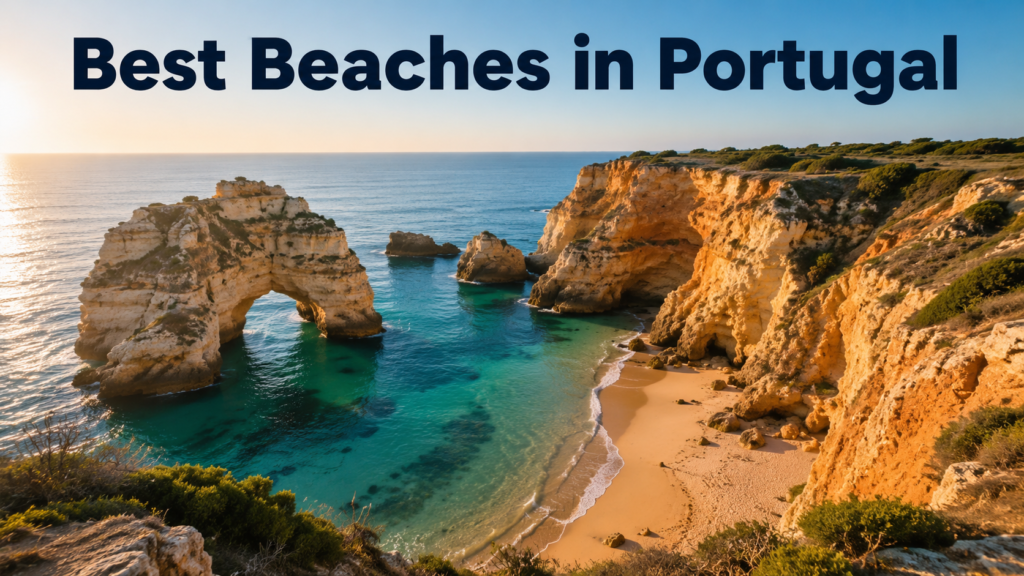

Portugal has one of the most varied coastlines in Europe, and picking the “best” beach really depends on what kind of day at the sea you’re after. Do you want a sheltered golden cove beneath limestone cliffs, a wild Atlantic surf break, a family friendly bay with warm shallow water, or an empty stretch of dune backed by pine forest? Portugal has all four, often within a couple of hours of each other.
This guide walks through the best beaches in Portugal region by region from the postcard coves of the Algarve to the wild Alentejo coast, the beaches near Lisbon and Sintra, the big wave capital of Nazaré, and the volcanic and island beaches of Madeira and the Azores. Along the way you’ll find practical tips on timing, access, and which beach fits your travel style, so you can build an itinerary instead of just a bucket list.
What Makes Portugal’s Beaches So Special
Portugal’s coastline stretches for roughly 1,800 kilometers, and the character of the beaches changes dramatically as you move from south to north. The southern Algarve coast faces the sheltered waters of a gentler Atlantic bay, which is why its beaches feel calmer and warmer than almost anywhere else in the country. Move north past the Alentejo and up toward Lisbon, Nazaré, and Porto, and the coastline opens directly onto the full force of the Atlantic Ocean, producing colder water, bigger swells, and a much wilder, more dramatic landscape.
That geographic split is the single most useful thing to understand before planning a beach trip to Portugal. If your priority is warm, calm water for swimming and snorkeling, you want the Algarve, particularly the eastern half near Tavira and Cacela Velha, where the sea can reach the low to mid 20s Celsius by late summer. If you’re chasing dramatic scenery, surf culture, or simply want to avoid the crowds, the Alentejo, Costa Vicentina, and the Sintra Cascais coast deliver a rawer, quieter experience. Both versions of Portugal are worth seeing, and many travelers combine a few days in each.
It also helps to know that in Portugal, beach access is a protected public right. Every beach along the mainland coast is free to enter, with no private beaches and no entry fees, though you will typically pay for sun loungers, umbrellas, and parking at the more popular spots during peak season.
Best Beaches in the Algarve
The Algarve is Portugal’s beach capital, and for good reason. Its coastline is defined by honey colored limestone cliffs, hidden coves, sea caves, and startlingly clear turquoise water, all backed by a mild, sunny climate that gives it the longest beach season in the country. If you only have time to visit one region, this is the one most first time visitors choose, and the one that shows up in nearly every international ranking of the world’s best beaches.
Praia da Marinha
Praia da Marinha, set between the towns of Carvoeiro and Armação de Pêra, is widely considered the single most photographed beach in the Algarve, and arguably in all of Portugal. Golden cliffs frame a small, sheltered cove of clear water, punctuated by a distinctive double sea arch just offshore that forms a heart shape when viewed from above at the right angle. The beach itself is compact, split into two sections connected by a short tunnel carved through the rock, and it marks the starting point of the Percurso dos Sete Vales Suspensos, a roughly seven kilometer clifftop trail often rated the finest coastal walk in the country.
The catch is popularity. In high summer, the small clifftop car park fills before mid morning, access roads can be closed by police once capacity is reached, and the cove itself feels cramped at high tide. Visiting in May, early June, or September gives you a much better chance of experiencing the beach the way it looks in photographs, with a fraction of the crowds. The water here is generally gentle, with lifeguard supervision through summer, making it a solid option for confident young swimmers as well as snorkelers exploring the rocky edges of the cove.
Praia da Rocha and Praia dos Três Irmãos
If Marinha represents the Algarve’s quiet, cinematic side, Praia da Rocha is its social one. This is one of the largest and most developed beaches on the coast, a broad sweep of sand backed by high sandstone cliffs, Portimão’s seafront hotels, and a lively strip of beach bars and restaurants. It’s large enough to comfortably absorb peak summer crowds, with plenty of room for volleyball, paddle sports, and long shoreline walks, and its Blue Flag status reflects consistently high water quality and facilities.
Nearby, Praia dos Três Irmãos offers a more all around experience: dramatic rock arches and small coves at low tide, plenty of sand at high tide, and easy access from Alvor, a much quieter fishing town than Portimão. Together, these two beaches give a good sense of the western Algarve’s range, from resort energy to a calmer, more residential beach town feel just a few minutes apart.
Praia do Camilo, Ponta da Piedade, and Ilha de Tavira
Just outside Lagos, Praia do Camilo is a small, sheltered cove reached by a long wooden staircase, framed by dramatic rock formations that block much of the wind. It has become one of the most Instagrammed beaches in the country, which means it draws heavy crowds, especially since a partial cliff collapse closed one nearby staircase access point during recent winter storms a useful reminder to check current access conditions before planning a visit to any of the Algarve’s smaller cliff backed coves.
Nearby Ponta da Piedade is less a swimming beach than a spectacular formation of golden cliffs, grottoes, and arches best explored by kayak or small boat tour, while Praia da Dona Ana rounds out the Lagos cluster with calmer water and gentler access. On the eastern side of the Algarve, the character shifts entirely: Ilha de Tavira is a long barrier island reached by ferry, with wide, uncrowded sand dunes and some of the warmest water anywhere in Portugal, making it a favorite for families and anyone looking to escape the cliff and cove crowds of the central coast.
Best Beaches Near Lisbon and Sintra
You don’t need to leave the capital region to find world class beaches. Lisbon sits within an hour of four distinct coastlines, all reachable by train, bus, or ferry, which is one of the reasons the city has become such a popular base for combining urban sightseeing with genuine beach time.
Praia da Adraga and Praia da Ursa
In the Sintra municipality, Praia da Adraga has quietly become one of the country’s most talked about beaches, recently topping a ranking of Portugal’s highest rated beaches based on thousands of visitor reviews. It’s a dramatic, wide stretch of golden sand set between rugged rock outcrops, facing the open North Atlantic, with an arched rock formation on one side and a large rocky hill on the other. Unlike many of Portugal’s hidden coves, it has proper infrastructure, including showers, changing facilities, a well regarded on site restaurant, and lifeguards, though public transport options are limited, so a car is the easiest way to reach it.
Praia da Ursa, also near Sintra, trades convenience for raw drama. It’s one of the most visually striking beaches in Portugal, with towering rock stacks rising from the sand, but it requires a genuine hike down a steep, unmarked trail, has no facilities, and carries real currents and undertow. It’s best treated as a photography and nature destination rather than a casual swimming beach, and caution is essential if you do go in the water.
Cascais and Guincho
Closer to Lisbon, Cascais offers a gentler, more resort like beach experience. Praia da Rainha and the town’s other central beaches typically have calm, sheltered water suited to relaxed swimming, all within walking distance of cafés, shops, and the train line back to Lisbon. A short drive away within the Sintra Cascais Natural Park, Praia do Guincho flips that calm energy entirely: it’s an exposed, windswept expanse of sand that has become one of Europe’s premier windsurfing and kitesurfing spots, backed by dunes and hills rather than a promenade.
Further south of Lisbon across the river, Sesimbra and the Arrábida Natural Park add another dimension, with sheltered bays like Praia da Califórnia and Praia do Ouro offering unusually calm, clear water for a stretch of coast so close to a major city, making the area a popular day trip for families.
Best Beaches in the Alentejo and Costa Vicentina
For travelers who want Portugal’s beach beauty without Portugal’s beach crowds, the Alentejo coast and the Costa Vicentina a protected natural park stretching along the southwest coast are where to look. Building restrictions imposed to protect this coastline have kept large stretches wonderfully undeveloped, home to rare plant species, wetlands, and wildlife including otters and ospreys, alongside a coastline that has quietly built a strong reputation among European surfers.
Comporta and the Alentejo Coast
Comporta has become the chic, low key alternative to the Algarve, known for its endless pale sand dunes, laid back beach clubs, and the rice paddies that stretch inland behind the coast. It draws a different crowd than the cliffside coves further south think long, uninterrupted beach walks rather than snorkeling in a sheltered cove and its relative remoteness has, so far, kept it from feeling overrun. Further south, Melides offers a similar sense of open, empty sand with even fewer visitors.
Odeceixe and Vila Nova de Milfontes
Where the Alentejo meets the Algarve along the Vicentine coast, Praia de Odeceixe is one of Portugal’s most distinctive beaches: a river loops around the sand before meeting the Atlantic, creating a natural freshwater lagoon on one side and open ocean surf on the other. It’s an easy win for families, since you can choose calmer river water for younger children and proper waves for older kids and adults. Nearby, Vila Nova de Milfontes is a charming riverside fishing village at the mouth of the Mira river, with beautifully calm water that makes it one of the more swim friendly stops on this otherwise wilder stretch of coast.
Best Beaches for Surfing and Big Waves
Portugal’s Atlantic facing coastline has made it one of the most important surf destinations in Europe, and two towns in particular define that reputation.
Nazaré
Nazaré is famous worldwide for the biggest rideable waves on the planet, generated by an underwater canyon just offshore that funnels and amplifies Atlantic swells. The giant wave season generally runs from October through March, when professional big wave surfers attempt rides that have set world records, including a wave measured at over 26 meters. Outside of that season, Nazaré is a much calmer, more conventional beach town, with a long stretch of sand, a historic fishing quarter, and a funicular up to the fort viewpoint where spectators watch the winter swells break.
Ericeira and the Costa Vicentina Surf Towns
North of Lisbon, Ericeira holds Europe’s only World Surfing Reserve designation, thanks to a cluster of consistent, high quality breaks along a short stretch of coastline. Further south, Aljezur and Arrifana anchor the surf scene of the Costa Vicentina, with a laid back, slightly countercultural beach town atmosphere that has drawn comparisons to classic California surf towns. These are beaches built around a lifestyle as much as a view, and they tend to attract longer stays than quick day trip visits.
Best Beaches on Portugal’s Islands
Portugal’s beach story doesn’t end on the mainland. Two archipelagos, Madeira and the Azores, add volcanic and subtropical beaches with a completely different feel from the continental coast.
Porto Santo, Madeira
Porto Santo, the smaller island beside Madeira, is home to the only long natural sand beach in that archipelago, a roughly nine kilometer stretch often described as the longest single beach in Portugal. Its fine golden sand is said to have therapeutic properties for joint conditions, and the shallow, warm water makes it noticeably more swim friendly than Madeira’s own rockier, more dramatic coastline.
The Azores
The Azores trade classic sand beach scenery for something more volcanic: black lava rock coastlines, natural seawater pools carved into basalt, and a scattering of genuine sand beaches like Praia Formosa on Santa Maria island, considered the best conventional beach in the archipelago. These beaches suit travelers more interested in dramatic landscapes, whale watching, and hiking than a traditional lie on the sand holiday.
Portugal Beach Comparison at a Glance
| Region | Best For | Water Temperature | Crowd Level (Aug) | Best Season |
|---|---|---|---|---|
| Algarve (Marinha, Rocha, Tavira) | Cliffs, calm water, families | Warm (22–24°C east) | Very high | May–June, September |
| Lisbon & Sintra (Adraga, Guincho, Cascais) | Day trips, surf, variety | Cool–moderate | High near city | May–October |
| Alentejo & Costa Vicentina (Comporta, Odeceixe) | Empty sand, wild beauty | Cool | Low–moderate | June–September |
| Nazaré & Ericeira | Surfing, big wave spectacle | Cool | Moderate | Oct–Mar (waves), summer (swim) |
| Porto Santo (Madeira) | Long sand beach, island calm | Warm | Low–moderate | June–September |
| Azores | Volcanic pools, nature | Cool | Low | June–September |
When to Visit Portugal’s Beaches
Timing matters more in Portugal than in many Mediterranean destinations, because the country’s beach experience shifts noticeably by month and by coast. July and August bring the warmest air and the biggest crowds, especially at famous Algarve coves like Marinha and Camilo, where parking and access can genuinely limit how much of the beach you get to enjoy. September consistently comes up as the sweet spot across nearly every part of the country: the sea is at its warmest, school holidays have ended, and prices for accommodation start to drop, while the weather generally remains reliably sunny well into October.
Late spring, particularly May and early June, offers a similar trade off in reverse slightly cooler water in exchange for near empty beaches and lower prices. If your priority is Nazaré’s famous big waves rather than swimming, the calculation flips entirely, since the giant wave season runs through the Atlantic winter, from roughly October to March, when the rest of the country’s beaches are quiet and cool.
Travel Tips for Visiting Portugal’s Beaches
A few practical details go a long way toward making a Portuguese beach trip smoother, especially if you’re combining several regions in one visit.
- Arrive early at famous coves. Beaches like Praia da Marinha and Praia do Camilo have small clifftop car parks that fill by mid morning in summer; arriving before 10 a.m. is often the difference between easy parking and a long walk.
- Respect the flag system. Atlantic beaches carry real currents, and lifeguard flagged swimming zones (typically staffed mid June through mid September) should be taken seriously, particularly on the exposed west coast and around Nazaré.
- Budget for extras, not entry. Beach access itself is free by law across Portugal, but sun loungers and umbrellas typically run in the mid to high teens of euros per day in peak season, and clifftop parking near the most popular coves often carries a small daily fee.
- Check access conditions before you go. Storm damage occasionally closes staircases or trails to smaller cliff backed coves; a quick search for the specific beach’s current status can save a wasted trip.
- Pack for two coastlines. If your itinerary spans the Algarve and the west coast or Alentejo in the same trip, bring a light jacket water and air temperatures can differ noticeably between the sheltered south and the open Atlantic north.
- Consider a car for the coves. Public transport reaches the main towns, but many of the most photographed small beaches, from Adraga to Odeceixe, are far easier to reach with a rental car.
Final Thoughts
Portugal’s coastline rewards travelers who look past the postcard shot of Praia da Marinha, as beautiful as it genuinely is. The country’s real strength is variety: sheltered golden coves in the Algarve for calm, warm swimming; wild dunes and empty sand along the Alentejo and Costa Vicentina for travelers chasing solitude; family friendly river meets ocean beaches like Odeceixe; and an entirely different kind of drama at Nazaré, where the beach becomes a stage for the biggest waves in the world. Whichever coast you choose, visiting in the shoulder months of May, June, or September will consistently give you the best version of Portugal’s beaches, with warm enough water, manageable crowds, and the kind of light that makes this coastline so famous in the first place.
Frequently Asked Questions
What is generally considered the best beach in Portugal?
Praia da Marinha in the Algarve is the beach most consistently ranked at or near the top of lists of Portugal’s, and even the world’s, most beautiful beaches, thanks to its golden cliffs and double sea arch formation. That said, “best” depends heavily on what you’re looking for, and beaches like Praia da Adraga near Sintra and Comporta in the Alentejo have strong followings of their own.
Which region of Portugal has the warmest beach water?
The eastern Algarve, around Tavira and Cacela Velha, typically has the warmest sea temperatures in mainland Portugal, reaching the low to mid 20s Celsius by late summer thanks to its sheltered position away from the open Atlantic swell.
Are Portuguese beaches free to visit?
Yes. By Portuguese law, every beach on the mainland is public and free to access, with no private beaches. You may pay separately for sun loungers, umbrellas, and nearby parking at popular beaches during peak season.
When is the best time to visit Portugal’s beaches?
September is widely considered the best all round month, combining warm sea temperatures, fewer crowds than August, and lower accommodation prices. May and early June offer a cooler water trade off for even quieter beaches, while October through March is the season to visit Nazaré specifically for its giant waves rather than for swimming.
Which Portuguese beach is best for families with young children?
Ilha de Tavira in the eastern Algarve and Praia de Odeceixe on the Costa Vicentina are both strong family choices, offering calm, shallow water, and in Odeceixe’s case, a sheltered river lagoon alongside the open ocean.
Is it safe to swim at all beaches in Portugal?
No. Many of Portugal’s most scenic beaches, particularly on the exposed Atlantic west coast and around Sintra, such as Praia da Ursa, have strong currents and limited or no lifeguard coverage. Stick to lifeguard flagged swimming areas, generally staffed from mid June to mid September, and treat unsupervised wild beaches with caution.
Where can I see Portugal’s famous big waves?
Nazaré, on the Silver Coast north of Lisbon, is the place to see them. An underwater canyon offshore amplifies Atlantic swells into some of the largest rideable waves on record, with the main season running from roughly October to March.
Are there good beaches close to Lisbon without renting a car?
Yes. Cascais, Estoril, and Costa da Caparica are all reachable from central Lisbon by train or ferry in well under an hour, making them practical options for a beach day without a car, though many of the more secluded Sintra area coves are easier to reach with your own transport.
You may also read more blogs