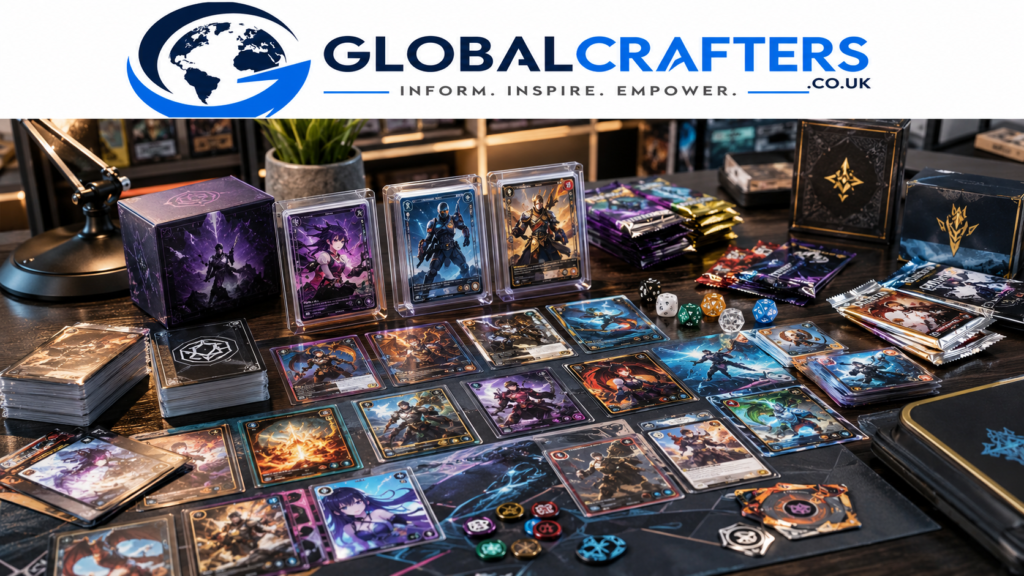

Popular trading card games, commonly called TCGs, are collectible card games in which players build decks from cards they own and use those decks to compete against other players. Unlike ordinary collectible cards, TCG cards are designed with gameplay mechanics, rules, strategies, abilities, resources, and different levels of rarity.
Players can normally obtain cards through booster packs, starter decks, special collections, tournament products, or individual purchases. The “trading” element comes from the ability to exchange cards with other collectors and players, although many modern TCG communities also buy and sell individual cards through secondary marketplaces.
The biggest trading card games combine several experiences into one hobby. A player can enjoy strategic competition, while another person may primarily collect artwork, chase rare cards, follow a favorite franchise, or participate in tournaments. This flexibility is one of the reasons TCGs continue to attract both longtime fans and newcomers.
In 2026, the TCG market includes long running games such as Pokémon, Magic: The Gathering, and Y Gi Oh!, alongside newer franchises such as One Piece, Disney Lorcana, Riftbound, Gundam, and Star Wars: Unlimited. Recent sales data shows that the market remains highly competitive, with several games experiencing significant momentum.
Latest Update on the TCG Market
The latest available 2026 sales data gives a useful picture of which trading card games currently have the strongest commercial presence. According to TCGplayer’s Q2 2026 marketplace data, Magic: The Gathering ranked first by gross merchandise value, followed by Pokémon, One Piece Card Game, and Yu Gi Oh!. Disney Lorcana moved up significantly during the quarter, while Riftbound, Gundam, Dragon Ball Super Fusion World, and Digimon also remained among the leading product lines.
The Q1 2026 rankings were similar, with Magic, Pokémon, One Piece, and Yu Gi Oh! occupying the first four positions. Riftbound followed, while Pokémon Japan, Gundam, Disney Lorcana, Dragon Ball Super Fusion World, and Digimon rounded out the top ten.
That makes it difficult to identify a single “best” TCG. Popularity depends on what you value. Someone interested in collecting may prefer Pokémon, while a highly competitive player might choose Magic or Yu Gi Oh!. A fan of anime and manga may gravitate toward One Piece, Gundam, or Dragon Ball, while Disney fans have a natural entry point through Lorcana.
The broader market is also expanding. Industry research published in August 2026 estimates that the global trading card games market could reach $32.1 billion by 2033, with demand supported by collecting, competitive gameplay, major entertainment franchises, organized play, and premium products.
Pokémon Trading Card Game
The Pokémon Trading Card Game remains one of the most recognizable and accessible TCGs in the world. Its biggest advantage is the strength of the Pokémon franchise itself. Players can build decks around familiar Pokémon while collectors can focus on artwork, rarity, characters, special illustrations, promotional cards, and memorable sets.
The gameplay revolves around Pokémon, Energy cards, Trainer cards, attacks, abilities, and Prize cards. The basic concept is relatively easy to understand, which makes Pokémon a popular entry point for younger players and adults who have never played a TCG before.
At the competitive level, however, Pokémon becomes considerably deeper. Deck construction, resource management, card sequencing, matchup knowledge, rotation, and tournament preparation all matter. This gives the game enough strategic depth to support a serious competitive community without making the entry level experience overwhelming.
The Pokémon TCG has also remained exceptionally active in 2026. Recent releases have included Mega Evolution expansions such as Mega Evolution—Chaos Rising and Mega Evolution Pitch Black.
One of the biggest upcoming milestones is the Pokémon TCG’s 30th anniversary. Pokémon has announced a 30th Celebration expansion for September 16, 2026, with a simultaneous worldwide release. The set is planned to feature foil cards throughout, a new rarity, and the return of classic cards.
Best for: Beginners, collectors, families, competitive players, and Pokémon fans.
Magic: The Gathering
Magic: The Gathering is one of the foundational modern trading card games and remains one of the most influential TCGs ever created. Its appeal comes from extraordinarily deep gameplay, a huge card pool, multiple formats, and a long running competitive and casual community.
Magic players construct decks around colors of mana and a wide variety of creatures, spells, artifacts, enchantments, planeswalkers, and other card types. Different formats create different experiences, ranging from smaller rotating environments to enormous eternal card pools.
One of Magic’s major strengths is variety. A new player can learn through beginner friendly products and casual formats, while experienced players can spend years mastering deck construction and competitive strategy. Commander, in particular, has become a major way for people to enjoy Magic socially.
The game’s collecting side is also substantial. Older cards, special treatments, alternate artwork, premium editions, crossover products, and iconic characters can attract collectors even when they are not primarily competitive players.
TCGplayer ranked Magic: The Gathering as the best selling TCG product line in both Q1 and Q2 2026 based on marketplace GMV.
Best for: Strategy enthusiasts, competitive players, collectors, and people who want a very deep card game.
One Piece Card Game
The One Piece Card Game has become one of the most important newer entries in the modern TCG market. Based on the hugely popular One Piece manga and anime, the game combines recognizable characters with competitive deck building and a growing organized play ecosystem.
Players build decks around leaders and use character, event, and stage cards to develop their strategy. The game’s identity is strongly connected to the One Piece world, which gives fans an immediate emotional connection with the cards.
One Piece has been particularly interesting because it has managed to compete commercially with much older TCGs. TCGplayer ranked it third by GMV in both Q1 and Q2 2026, behind Magic and Pokémon. It also remained ahead of Yu Gi Oh! during those quarters.
The game’s collector market has also attracted considerable attention. Anime franchises, anniversary products, promotional cards, special artwork, and highly desirable character cards can create strong demand beyond ordinary competitive play.
For anime fans who want a TCG with serious gameplay potential, One Piece is one of the most obvious choices. It also demonstrates how powerful entertainment franchises can help introduce new audiences to the physical card game hobby.
Best for: One Piece fans, anime collectors, competitive players, and people looking for a newer major TCG.
Yu Gi Oh! Trading Card Game
Yu Gi Oh! is another legendary name in the trading card game industry. It has been part of the TCG landscape for decades and has developed one of the most recognizable competitive ecosystems in the hobby.
The game is famous for its monsters, Spells, Traps, Extra Deck mechanics, and highly developed combo strategies. Compared with some beginner oriented TCGs, Yu Gi Oh! can have a steeper learning curve because experienced players need to understand card interactions, timing, chains, deck archetypes, and a constantly changing competitive environment.
For collectors, Yu Gi Oh! also has an enormous historical catalog. Early cards, iconic monsters, special rarities, tournament cards, anniversary products, and nostalgic releases continue to attract collectors.
In Q2 2026, Yu Gi Oh! ranked fourth among TCGplayer’s best elling product lines. TCGplayer also noted growth during the quarter connected with Rarity Collection V and its extended art cards.
Best for: Competitive players, anime fans, nostalgic collectors, and people who enjoy complex combos.
Disney Lorcana
Disney Lorcana combines the traditional TCG format with one of the world’s most recognizable entertainment brands. Instead of focusing on a single franchise, it brings together characters and stories from across Disney’s extensive library.
The game uses characters, actions, items, and other cards to create a relatively approachable gameplay experience. Its colorful artwork and familiar characters make it particularly attractive to collectors and families.
Lorcana’s popularity has grown considerably since its launch, and its position in the 2026 market demonstrates that it is more than a short lived licensed card game. TCGplayer ranked Disney Lorcana fifth in Q2 2026, up from eighth in the previous quarter.
One factor behind this growth was the release of Wilds Unknown, which introduced Pixar characters and generated strong collector interest. TCGplayer described the release as a major contributor to Lorcana’s improved Q2 position.
Best for: Disney fans, families, collectors, casual players, and people who prefer visually appealing card games.
Riftbound: League of Legends Trading Card Game
Riftbound is one of the newer major TCGs and is based on the League of Legends universe. It has attracted attention because it combines an enormous gaming franchise with a dedicated physical card game system.
The game is particularly interesting for people who already enjoy League of Legends but want a tabletop experience. Its characters and visual identity provide a familiar foundation while its gameplay offers something different from digital League of Legends.
Riftbound ranked fifth in TCGplayer’s Q1 2026 rankings and sixth in Q2.
However, recent secondary market data suggests that Riftbound has significant momentum. TCGIndex reported that it had the strongest seven day market movement among its tracked TCGs at the end of August 2026, while its 90 day movement was also exceptionally strong.
That does not automatically make it the best game, but it does make Riftbound one of the most interesting TCGs to watch.
Best for: League of Legends fans, newer TCG players, competitive players, and people interested in emerging games.
Gundam Card Game
The Gundam Card Game brings the famous mecha franchise into the modern competitive TCG market. It gives fans another way to interact with mobile suits, pilots, factions, and stories from the Gundam universe.
The biggest attraction is naturally the franchise. Gundam has decades of history, an enormous international fanbase, and countless recognizable designs. That provides the game with a strong collecting foundation while the card mechanics create a separate reason to play.
Gundam ranked seventh in TCGplayer’s Q1 2026 rankings and eighth in Q2.
Recent market tracking has also shown continued interest in Gundam promotional cards and other collectible products.
Best for: Gundam fans, anime and mecha collectors, and players looking for a newer franchise based TCG.
Dragon Ball Super Card Game Fusion World
Dragon Ball has a natural connection to trading cards because the franchise has attracted collectors and competitive players for years. Fusion World provides a modern TCG experience built around Dragon Ball characters and battles.
The game combines recognizable characters with fast paced card game mechanics. That makes it attractive to people who want a competitive game while also giving Dragon Ball fans a reason to build a collection.
Dragon Ball Super Fusion World reached ninth in TCGplayer’s Q1 2026 rankings and maintained that position in Q2.
Its market momentum has also been noteworthy. TCGIndex reported substantial 90 day growth for Dragon Ball Super among its tracked markets in August 2026.
Best for: Dragon Ball fans, anime collectors, and players who enjoy competitive card battles.
Digimon Card Game
The Digimon Card Game is another established franchise based TCG that combines collectible characters with strategic gameplay. It appeals strongly to fans who grew up with Digimon while also offering mechanics that can attract dedicated card game players.
The game’s ecosystem includes Digimon, Digi Eggs, Tamers, Options, and other cards that work together to develop a deck. This creates strategic choices around evolution, resources, board development, and timing.
Digimon has remained a notable product line in 2026. TCGplayer ranked it tenth by GMV in both Q1 and Q2.
It may not receive the same mainstream attention as Pokémon or Magic, but its dedicated community makes it an important option for anime and digital monster fans.
Best for: Digimon fans, anime collectors, and players looking for an established niche TCG.
Star Wars: Unlimited
Star Wars: Unlimited is another major franchise based trading card game aimed at fans of the Star Wars universe. It provides a way to build decks around characters and themes from the wider Star Wars galaxy.
The game’s appeal comes from combining a recognizable setting with a dedicated card game system. Players can enjoy the competitive side while collectors can focus on favorite characters, scenes, artwork, and special cards.
Star Wars: Unlimited is part of the broader group of established TCGs currently tracked and covered by major hobby market sources. Beckett’s 2026 TCG release coverage includes Star Wars: Unlimited alongside Pokémon, Magic, Yu Gi Oh!, One Piece, Lorcana, Flesh and Blood, and Gundam.
Best for: Star Wars fans, casual players, collectors, and players seeking a modern franchise TCG.
Flesh and Blood
Flesh and Blood stands apart from many popular TCGs because it is not built around an existing entertainment franchise. Instead, its identity comes primarily from its original fantasy world and competitive gameplay.
The game focuses heavily on hero combat, equipment, weapons, attacks, reactions, and tactical decision making. It is particularly attractive to players who want a card game where the gameplay itself is the central attraction rather than an established movie, anime, or video game franchise.
Flesh and Blood also has an organized competitive scene and a dedicated collector community. It can be a strong option for experienced TCG players who want something less dependent on a famous intellectual property.
Best for: Competitive players, strategy enthusiasts, and people who prefer original fantasy TCGs.
How to Choose the Right Trading Card Game
Choosing between popular trading card games can be difficult because each game emphasizes different aspects of the hobby. The best starting point is to decide whether you care most about gameplay, collecting, a particular franchise, competitive tournaments, or simply playing casually with friends.
If you want the easiest recognizable starting point, Pokémon is a strong choice. If deep strategy is your priority, Magic or Yu Gi Oh! may be more appealing. If you are an anime fan, One Piece, Dragon Ball, Digimon, or Gundam could be better matches.
Your local community should also influence the decision. A fantastic TCG becomes less enjoyable if you cannot find anyone nearby to play against. Before buying heavily, check whether local game stores, clubs, schools, or online communities support the game you are considering.
Another important consideration is cost. You can start many TCGs relatively cheaply with a starter deck, but competitive play and collecting rare cards can become much more expensive. Start with gameplay before spending heavily on premium cards.
Best Trading Card Games for Beginners
Pokémon is arguably one of the most approachable choices for someone completely new to TCGs. The franchise is familiar, starter products are widely available, and the basic gameplay concepts can be learned gradually.
Disney Lorcana is another appealing beginner option because recognizable Disney characters make the cards easy to understand emotionally, even before a new player learns the mechanics.
Magic can also be beginner friendly when approached through appropriate starter products and casual formats, although its enormous card pool can eventually become more complicated.
For beginners, the most important thing is not necessarily choosing the “strongest” game. Choose a TCG whose characters, artwork, or theme genuinely interest you. Enjoyment makes learning rules and improving much easier.
Trading Card Games for Competitive Players
Competitive TCG players generally look for games with deep strategic systems, organized tournaments, frequent deck building decisions, and an active player base. Magic: The Gathering and Yu Gi Oh! are obvious choices because of their long competitive histories.
Pokémon also provides a highly developed competitive ecosystem. Its organized tournament structure gives skilled players opportunities to compete at local, regional, national, and international levels.
One Piece, Lorcana, Riftbound, Gundam, and other newer games are worth considering for players who want to enter growing competitive communities. Newer games can sometimes feel particularly exciting because strategies and metagames are still developing.
The important distinction is that popularity and competitive suitability are not exactly the same thing. A game can be extremely popular with collectors without being your ideal competitive TCG.
Trading Card Games for Collectors
Pokémon is one of the strongest choices for collectors because it combines a globally recognized franchise with decades of card history, multiple rarity levels, special illustrations, promotional releases, and a large secondary market.
Magic also has enormous collecting depth because of its long history and huge number of sets. Older cards, iconic characters, special treatments, premium releases, and crossover products can all attract collectors.
One Piece, Disney Lorcana, Gundam, Dragon Ball, and other franchise based games offer a different collecting experience. Their major advantage is the emotional connection fans already have with the characters and worlds.
Collectors should remember that market prices can change quickly. A card being rare does not guarantee that its value will rise. Popularity, supply, condition, tournament demand, artwork, character popularity, print runs, and collector sentiment can all affect prices.
Why Are Trading Card Games So Popular?
One reason TCGs remain popular is that they combine gaming and collecting in a single hobby. A video game usually gives players digital items, while a TCG lets players physically own the cards they use.
The social element is equally important. Local tournaments, game stores, trading groups, conventions, online communities, and casual gatherings create opportunities for people to meet other fans.
Franchise power is another major factor. Pokémon, One Piece, Disney, Dragon Ball, Gundam, Star Wars, Digimon, and League of Legends already have passionate audiences. A TCG gives those fans a new way to interact with familiar characters.
The market is also supported by regular product releases. New expansions keep the hobby moving, give competitive players new strategies to explore, and provide collectors with new cards to chase.
Recent industry research highlights collectible demand, organized play, local game stores, premium products, limited releases, and franchise driven fandom as important factors supporting the physical TCG market.
Tips for Starting a TCG Collection
Start with a game you actually enjoy. Buying cards simply because someone online says they are valuable can turn the hobby into an expensive guessing game.
A starter deck is usually a better first purchase than immediately buying numerous booster packs. It gives you something playable and helps you understand what kinds of cards and strategies you enjoy.
Learn basic card protection early. Sleeves, deck boxes, storage boxes, and sensible organization can help protect your collection from scratches, moisture, bending, and other damage.
If collecting is your main goal, research the game’s different rarities and product types before spending money. Understand the difference between ordinary cards, alternate art cards, promotional cards, special rarities, and premium versions.
Most importantly, avoid treating TCG cards as guaranteed investments. Prices can rise, fall, or remain stagnant. Collect because you enjoy the game, characters, artwork, history, or community first.
Conclusion
The world of popular trading card games is bigger and more diverse than ever. Long established giants such as Pokémon, Magic: The Gathering, and Yu Gi Oh! continue to dominate the hobby, while One Piece, Disney Lorcana, Riftbound, Gundam, Dragon Ball Super Fusion World, and other newer games are expanding the choices available to players and collectors.
The 2026 market shows that there is no single formula for success. Some games are driven by decades of history, some by powerful entertainment franchises, and others by innovative gameplay or rapidly growing communities. TCGplayer’s latest Q2 data particularly highlights the strength of Magic, Pokémon, One Piece, Yu Gi Oh!, and the rising position of Disney Lorcana.
You may also explore mre blogs
Frequently Asked Questions About Popular Trading Card Games
What is the most popular trading card game?
There is no single measurement for popularity, but Pokémon and Magic: The Gathering are among the strongest global TCG brands. TCGplayer’s Q2 2026 marketplace data ranked Magic first and Pokémon second by product line GMV.
What is the best trading card game for beginners?
Pokémon is one of the easiest major TCGs for beginners because its characters are familiar and its basic gameplay can be learned progressively. Disney Lorcana is another approachable option for new players.
Is Magic: The Gathering still popular?
Yes. Magic: The Gathering remained the highest ranked TCG by TCGplayer marketplace GMV in both Q1 and Q2 2026. Its longevity, competitive scene, casual formats, and enormous card pool continue to support its popularity.
Is One Piece Card Game popular?
Yes. One Piece ranked third by TCGplayer’s Q2 2026 GMV, behind Magic and Pokémon, and it also ranked third in Q1. This makes it one of the strongest newer TCGs in the current market.
Which TCG is best for collectors?
Pokémon is a particularly strong choice because of its massive worldwide fanbase, long history, extensive product range, and large collector market. Magic, One Piece, Disney Lorcana, and other franchise TCGs can also offer strong collecting opportunities.
Are trading card games expensive?
They can be, but they do not have to be. A player can begin with a starter deck and gradually expand. Costs increase when players pursue competitive decks, large collections, premium products, rare cards, or graded cards.
Can you make money from trading card games?
Some cards have significant secondary market value, but there is no guarantee that a particular card or sealed product will increase in price. TCGs should primarily be treated as a hobby rather than a guaranteed investment.
Which trading card game should I start with in 2026?
Start with the game that matches your interests and has an active community you can access. Pokémon is an excellent general starting point, while Magic, Yu Gi Oh!, One Piece, Lorcana, and newer games such as Riftbound can suit different types of players.