
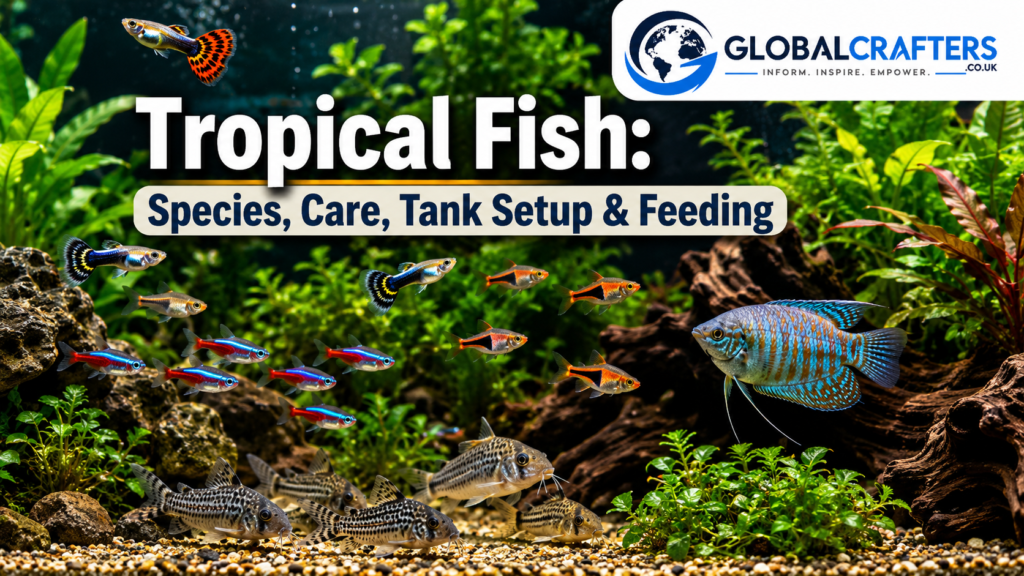

Tropical fish are among the most popular aquarium animals because of their remarkable colours, varied shapes and fascinating behaviours. The term tropical fish does not describe one species or even one scientific family. Instead, it generally refers to fish from warm water environments, including freshwater rivers and lakes as well as tropical marine habitats.
For aquarium keepers, choosing tropical fish involves much more than picking the most colourful species at a local fish shop. Temperature, water chemistry, aquarium size, filtration, diet and compatibility all influence whether fish remain healthy.
A successful tropical aquarium is therefore built around the needs of the fish rather than simply the appearance of the tank.
What Are Tropical Fish?
Tropical fish are fish that naturally live in warm aquatic environments, particularly regions close to the tropics. In the aquarium hobby, the term commonly refers to freshwater species such as guppies, tetras, rasboras, gouramis, angelfish and corydoras, although tropical marine species are also kept in saltwater aquariums.
Most tropical aquarium fish require warmer and relatively stable water compared with cold water species such as goldfish. The exact temperature, pH, hardness and other conditions depend on the individual species.
For example, the RSPCA notes that tropical fish generally need a heated aquarium, while different species can have different temperature ranges. Guppies, for instance, can tolerate approximately 22–28°C, demonstrating why species specific research matters.
The most important point is that “tropical” is a care category, not a single type of fish.
Freshwater vs Marine Tropical Fish
Tropical aquariums can broadly be divided into freshwater and marine systems.
| Feature | Freshwater tropical fish | Marine tropical fish |
|---|---|---|
| Water | Freshwater | Saltwater |
| Typical examples | Guppies, tetras, rasboras | Clownfish, damselfish, some gobies |
| Setup | Generally simpler | Usually more specialised |
| Salt required | No | Yes |
| Water chemistry | Species specific | Often more demanding |
| Beginner suitability | Many suitable options | Depends strongly on species and setup |
The distinction matters because equipment and water preparation are not interchangeable. A freshwater tropical aquarium should not simply be converted into a marine system by adding salt.
Freshwater Tropical Fish
Freshwater tropical fish are particularly popular with beginners because there is a large range of species with different sizes, colours and behaviours.
Common examples include:
- Guppies
- Neon tetras
- Harlequin rasboras
- Zebra danios
- Corydoras
- Bettas
- Gouramis
- Angelfish
- Mollies
- Platies
These fish originate from different parts of the world, including South America, Central America, Africa and Southeast Asia. Consequently, their requirements can vary significantly.
The RSPCA identifies groups including African fish, South American tetras and catfish, and Southeast Asian rasboras, barbs and labyrinth fish among tropical freshwater aquarium fish.
Marine Tropical Fish
Marine tropical fish live in warm seawater environments and include species associated with coral reefs and other tropical marine habitats.
They can be spectacular additions to an aquarium, but marine systems generally require more careful management of salinity and water chemistry. Some marine species also have highly specialised diets, habitat requirements or social behaviours.
For beginners, the key lesson is simple: research the species and aquarium system before buying the fish.
Popular Tropical Fish for Home Aquariums
Different tropical fish suit different aquariums. A small schooling species may thrive in a community tank while a territorial fish may need more careful planning.
| Fish | Notable characteristic | Important consideration |
|---|---|---|
| Guppy | Colourful livebearer | Can reproduce rapidly |
| Neon tetra | Small schooling fish | Best kept with suitable companions |
| Harlequin rasbora | Peaceful schooling species | Needs compatible tank mates |
| Betta | Attractive, territorial fish | Male bettas can fight |
| Corydoras | Bottom dwelling catfish | Social behaviour and suitable substrate matter |
| Gourami | Labyrinth fish | Species differ in temperament |
| Angelfish | Larger, distinctive cichlid | Needs considerably more space than tiny tetras |
Schooling and shoaling behaviour is particularly important. The RSPCA notes that many tropical fish, including danios, tetras, rainbowfish, rasboras and many catfish, are shoaling species and should generally be maintained in groups rather than individually.
Tropical Fish Aquarium Requirements
A tropical aquarium should be established before fish are introduced. Essential equipment normally includes an appropriately sized aquarium, filter, heater with thermostat, thermometer, lighting and suitable substrate or decorations.
The aquarium should also provide areas where fish can hide and explore. Plants, wood, rocks and other appropriate structures can create a more natural environment while giving fish shelter.
Water Temperature
Temperature stability is more important than simply choosing a number that sounds “tropical.”
Many tropical fish thrive in warm water around 24–28°C, although the appropriate range varies by species.
A reliable aquarium heater and thermometer are therefore important. Temperature should also be checked regularly because heater failure or sudden environmental changes can stress fish.
Filtration and the Nitrogen Cycle
Filtration is one of the most important parts of aquarium management.
Fish waste introduces ammonia into the water. Beneficial bacteria in an established biological filter help convert ammonia into nitrite and then nitrate. Ammonia and nitrite are toxic to fish, while nitrate is comparatively less harmful but still needs to be controlled.
The RSPCA recommends fishless cycling for new aquariums and states that ammonia and nitrite should be at 0 mg/L before fish are introduced.
Merck Veterinary Manual also highlights “new tank syndrome,” in which ammonia or nitrite can rise after a new aquarium is established. Its guidance notes that biological filtration can take considerable time to become established.
This is why adding a large number of fish immediately after filling a new aquarium is a poor strategy.
Tank Size and Aquascaping
Bigger is generally better when choosing an aquarium because larger volumes can provide more stable water conditions.
The RSPCA recommends considering the adult size of fish rather than buying an aquarium based solely on the size of young fish at the shop. It also warns that overcrowding can increase pollution and reduce available oxygen.
Aquascaping should also reflect the species. Bottom dwelling fish need appropriate floor space, while active swimmers require sufficient open water.
What Do Tropical Fish Eat?
There is no single diet suitable for every tropical fish.
Some species are primarily omnivorous, while others have more specialised feeding habits. Aquarium foods can include flakes, pellets, frozen foods and other species appropriate options.
For example, the RSPCA recommends suitable supplementary foods such as daphnia and brine shrimp for many tropical fish and notes that bottom dwelling species may require sinking foods.
Overfeeding is one of the easiest ways to create aquarium problems because uneaten food decomposes and contributes to deteriorating water quality.
A practical approach is to provide only what fish can consume within a short feeding period and adjust the amount according to the species, fish size and number of fish.
Tropical Fish Compatibility
Two fish can look peaceful in a shop aquarium but behave very differently when placed together in a home tank.
Before creating a community aquarium, check:
- Adult fish size
- Temperament
- Water temperature requirements
- pH and hardness preferences
- Swimming level
- Feeding behaviour
- Shoaling requirements
- Territorial behaviour
- Fin nipping tendencies
Bettas provide a good example of why compatibility cannot be judged by appearance. Male bettas can be territorial and may fight with other males or unsuitable tank mates.
By contrast, many tetras, rasboras and similar fish are naturally social and benefit from being maintained in groups.
The safest approach is to research every species before adding it rather than trying to solve compatibility problems after aggression begins.
How to Choose Healthy Tropical Fish
A healthy fish should generally appear active and responsive rather than lethargic.
Before purchasing, observe the aquarium and look for:
- Clear eyes
- Intact fins
- Smooth scales
- Normal swimming
- Healthy appetite
- No obvious sores
- No unusual white spots
- No persistent gasping
- No severely sunken or swollen body
The RSPCA identifies clear eyes, intact fins, active behaviour and normal swimming as useful indicators of healthy fish.
Also examine the entire shop tank. A poorly maintained aquarium, cloudy water or multiple visibly sick or dead fish can be a warning sign.
Once fish are purchased, acclimatisation should be handled carefully to reduce temperature and environmental shock.
Common Tropical Fish Health Problems
Health problems in tropical fish can have many causes, but poor water quality is one of the first things an aquarist should investigate.
Warning signs include:
- Gasping at the surface
- Loss of appetite
- Unusual swimming
- White spots
- Damaged fins
- Swollen body
- Protruding scales
- Pale patches
- Sudden inactivity
The RSPCA notes that surface gasping can indicate oxygen starvation or poor water quality, while temperature stress can also affect fish behaviour.
Instead of immediately adding medication, test the aquarium water first. Problems with ammonia, nitrite, nitrate, temperature or oxygen can sometimes be the underlying cause of visible symptoms.
If a fish appears seriously ill, professional veterinary advice is appropriate.
Common Mistakes Beginners Make
The most common aquarium problems are often caused by preventable setup and maintenance mistakes.
Adding fish too quickly: A new aquarium needs an established biological filtration system before it can safely support fish.
Overstocking: Too many fish increase waste production and competition for oxygen and food.
Ignoring water testing: Clear water can still contain dangerous levels of ammonia or nitrite.
Overfeeding: Excess food contributes to waste and deteriorating water quality.
Choosing fish by appearance alone: Beautiful fish may have incompatible temperatures, water chemistry or behaviour.
Skipping a heater: Tropical species generally require stable warm water rather than relying on room temperature.
Using an unsuitable aquarium: Small decorative bowls and containers can make filtration, oxygen exchange and temperature stability difficult.
Good fishkeeping is therefore less about constant intervention and more about establishing a stable environment and maintaining it consistently.
Conclusion
Tropical fish can make a fascinating aquarium community, but their bright colours should never be the only consideration when choosing them. Successful fishkeeping starts with understanding the species, establishing the aquarium properly and maintaining stable water conditions.
For beginners, a well planned freshwater tropical aquarium is often the most practical starting point. Choose compatible species, provide enough space, cycle the aquarium before stocking it, monitor water quality and feed responsibly. With those foundations in place, an aquarium becomes more than a decorative display it becomes a stable environment designed around the needs of its fish.
You may also read more blogs
Frequently Asked Questions
What are tropical fish?
Tropical fish are fish adapted to warm water environments. In the aquarium hobby, the term includes numerous freshwater and marine species rather than one specific scientific group. Their exact temperature, water chemistry, diet and social requirements depend on the individual species.
What temperature is best for tropical fish?
Many tropical aquarium fish are kept in water around 24–28°C, but there is no universal temperature for every species. Always check the recommended range for the particular fish being kept.
Are tropical fish freshwater or saltwater?
They can be either. Tropical fish include freshwater species such as guppies and tetras as well as marine species associated with warm seawater environments.
What tropical fish are good for beginners?
Many peaceful freshwater species can be suitable for beginners, including certain guppies, tetras, rasboras and corydoras. The best choice depends on aquarium size, water conditions and the fish’s compatibility with other inhabitants.
How many tropical fish can live together?
There is no universal number because stocking depends on aquarium volume, filtration, adult fish size, swimming behaviour and species requirements. Overstocking should be avoided because excess fish waste can quickly damage water quality.
Do tropical fish need a heater?
Most tropical aquarium fish require a heater to maintain their appropriate warm water temperature. A thermostat controlled heater and separate thermometer provide better temperature management.
How often should tropical fish be fed?
Feeding requirements vary by species, age and diet. Small, controlled meals are generally preferable to excessive feeding. Uneaten food should not be allowed to accumulate because it can contribute to poor water quality.
Why are my tropical fish staying near the surface?
Persistent surface gasping can indicate low oxygen or poor water quality, although some species naturally spend time near the surface. Test the water and check temperature, filtration and aeration if the behaviour is unusual.