
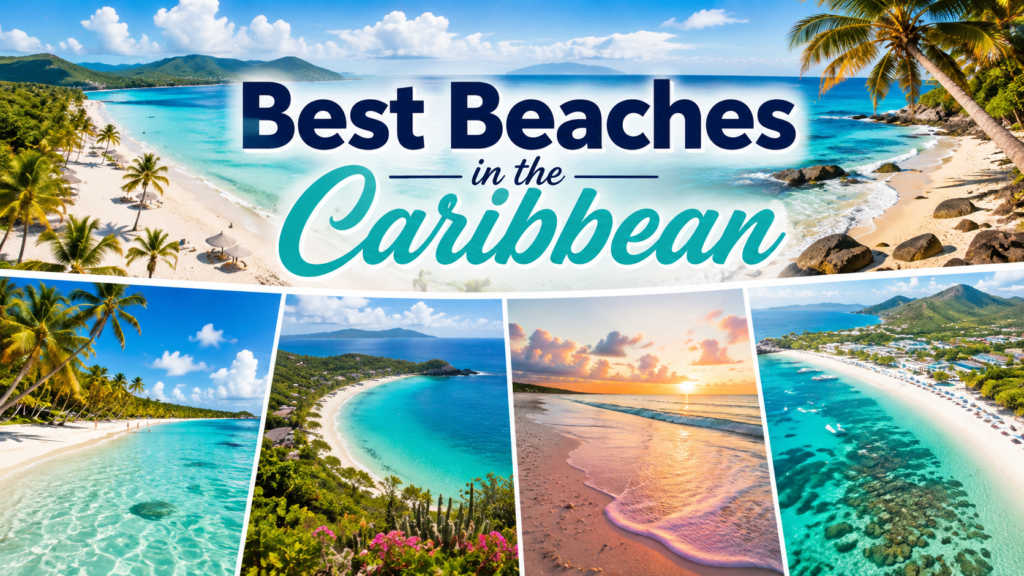

Best Beaches in the Caribbean: The Caribbean is home to an enormous variety of beaches, from wide stretches of powder white sand and calm turquoise bays to pink sand shores, protected national park coastlines and reefs packed with marine life. Choosing the best beach therefore depends on more than how attractive a photograph looks.
For an all round Caribbean beach holiday, Grace Bay Beach in Turks and Caicos, Seven Mile Beach in Grand Cayman, Eagle Beach in Aruba and Trunk Bay on St. John are particularly compelling. Travellers looking for something quieter may prefer Shoal Bay East in Anguilla or Grand Anse in Grenada, while Pink Sands Beach in Harbour Island offers one of the region’s most distinctive landscapes.
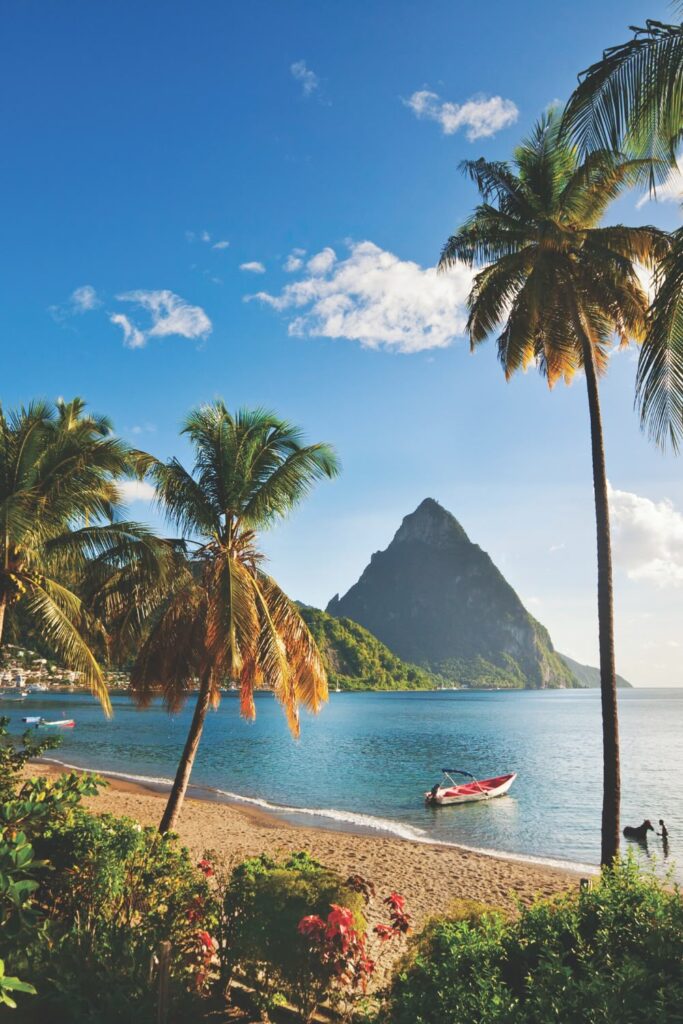
Here are some of the best Caribbean beaches to consider for your next trip.
Grace Bay Beach, Turks and Caicos
Grace Bay Beach on Providenciales is one of the Caribbean’s benchmark beaches. Its combination of exceptionally clear water, pale sand, extensive beachfront and easy access to accommodation makes it a strong choice for travellers who want a classic tropical holiday without sacrificing convenience.
The Turks and Caicos tourism authority describes Providenciales as a major tourism hub, with Grace Bay recognised repeatedly by travel publications and awards. The island also has other beaches, including Long Bay, Sapodilla Bay and Taylor Bay, making it possible to explore beyond the main resort area.
Best for: First time Caribbean visitors, couples, luxury stays and swimming.
Seven Mile Beach, Grand Cayman
Seven Mile Beach is one of Grand Cayman’s signature attractions. Despite its famous name, the beach is not simply about its length; its appeal comes from the combination of soft white sand, clear water, resorts, restaurants and watersports.
The official Cayman Islands tourism site highlights the beach’s calm conditions and suitability for swimming, snorkelling, paddleboarding and kayaking. It was also included among the world’s top beaches in Tripadvisor’s 2024 Travelers’ Choice recognition.
This makes Seven Mile Beach particularly useful for travellers who want a beautiful beach but also value easy access to facilities.
Best for: Families, resort holidays, watersports and convenience.
Eagle Beach, Aruba

Eagle Beach stands out for its exceptionally broad shoreline and soft white sand. It is also home to Aruba’s recognisable fofoti trees, which have become one of the island’s most photographed natural features.
The Aruba tourism authority says Eagle Beach was ranked No. 3 among Caribbean beaches in the 2026 Tripadvisor Travelers’ Choice awards. It also notes that the beach has parking, shaded areas, beach huts and watersports, while nearby low rise accommodation makes the area accessible to different types of visitors.
Another important feature is wildlife: Aruba’s tourism authority notes that four sea turtle species nest on the island, with many nests found at Eagle Beach. Visitors should therefore follow local turtle protection guidance when visiting nesting areas.
Best for: Wide beaches, swimming, photography and relaxed beach days.
Trunk Bay, St John
Trunk Bay combines tropical scenery with an unusually accessible snorkelling experience. Located within Virgin Islands National Park on St. John, the beach has white sand, clear turquoise water and coral reefs.
One of its biggest attractions is the underwater snorkelling trail, allowing visitors to explore marine life close to shore. The U.S. Virgin Islands tourism authority lists facilities including restrooms, showers, food service and snorkelling equipment, although visitors should note that lifeguard availability and facilities can vary with operating conditions.
Trunk Bay also has a particularly strong recent accolade: in July 2026, the U.S. Virgin Islands tourism authority announced that it had been named No. 1 on the 2026 World’s Best Beaches list.
Best for: Snorkelling, nature lovers, photographers and active beach trips.
Shoal Bay East, Anguilla
Shoal Bay East is a strong option for travellers who want the classic Caribbean combination of powdery sand and clear, shallow water but prefer a more relaxed island atmosphere.
Anguilla’s official tourism guide describes the eastern end of the island as home to magnificent Shoal Bay East, with restaurants and beach bars nearby.
The beach is particularly appealing for long walks, swimming and snorkelling. Unlike some heavily developed resort beaches, the wider Anguilla experience tends to feel more understated, making it attractive for couples and travellers prioritising relaxation.
Best for: Couples, swimming, snorkelling and a laid back atmosphere.
Flamenco Beach, Culebra
Flamenco Beach on Culebra, Puerto Rico, offers a sheltered horseshoe shaped bay with white sand and remarkably clear water. The destination’s official tourism organisation describes the beach as practically wave less, making it suitable for swimming, relaxing and snorkelling.
It is also more practical than a completely undeveloped beach. Facilities include bathrooms, showers, changing rooms, parking, lifeguards and food kiosks.
Culebra itself sits about 20 miles east of Puerto Rico’s main island, and travellers can reach it by ferry or flight.
Best for: Families, swimming, snorkelling and travellers wanting a scenic island escape.
Pink Sands Beach, Harbour Island
Pink Sands Beach offers something that most Caribbean beaches cannot: naturally pink coloured sand.
Located on Harbour Island in The Bahamas, the beach stretches for more than three miles and gets its distinctive colour partly from microscopic marine organisms called foraminifera. Their reddish pink shells mix with coral fragments and other sand materials along the shoreline.
The result is particularly striking around sunrise and sunset. Harbour Island also provides a charming complement to the beach, with Dunmore Town offering a compact island setting and a slower pace.
Best for: Romantic trips, photography, unique scenery and luxury getaways.
Grand Anse Beach, Grenada
Grand Anse is a two mile stretch of white sand on Grenada’s southwestern coast. Unlike beaches that are primarily associated with large resort complexes, Grand Anse combines beach time with restaurants, hotels, water sports and local activity.
The Grenada Tourism Authority describes the beach as having calm turquoise waters, beachfront accommodation, restaurants, beach bars and a craft and spice market.
Its proximity to St. George’s also makes it practical for travellers who want to combine a beach holiday with sightseeing, food and Grenadian culture.
Best for: Longer stays, local atmosphere, dining and sunset walks.
Carlisle Bay, Barbados
Carlisle Bay is a useful choice for travellers who want more than simply lying on the sand. Located near Bridgetown, the bay has a marine park that attracts divers and snorkellers.
The Barbados tourism authority highlights the area’s underwater marine attractions, including historic anchors and cannonballs on the seafloor.
Its location also makes it easier to combine a beach day with exploring Barbados’ capital and nearby attractions.
Best for: Snorkelling, diving, history and combining beach time with sightseeing.
How to Choose the Right Caribbean Beach
There is no single beach that is objectively best for everyone. Your priorities can narrow the choice considerably.
| What you want | Beach to consider |
|---|---|
| Classic all round Caribbean beach | Grace Bay |
| Resort convenience | Seven Mile Beach |
| Wide white sand shoreline | Eagle Beach |
| Snorkelling | Trunk Bay |
| Quiet romantic atmosphere | Shoal Bay East |
| Family friendly swimming | Flamenco Beach |
| Unusual scenery | Pink Sands Beach |
| Local atmosphere and dining | Grand Anse |
| Marine activities and sightseeing | Carlisle Bay |
For families, calm, shallow water and practical facilities should generally be higher priorities than a beach’s ranking on an international list. Flamenco and Seven Mile Beach are particularly attractive starting points, while Trunk Bay adds excellent snorkelling.
For couples, the decision can be more about atmosphere. Shoal Bay East, Pink Sands Beach and Grace Bay offer very different versions of a romantic Caribbean escape.
For snorkellers, the reef environment matters more than the colour of the sand. Trunk Bay’s underwater trail and the marine environment around Carlisle Bay make them particularly interesting.
Best Time to Visit Caribbean Beaches
The best time depends on the island, but travellers should understand Caribbean seasonality before booking.
The official Atlantic hurricane season runs from June 1 through November 30, although tropical systems can occur outside those dates.
That does not mean every Caribbean destination experiences poor weather throughout this period. Conditions vary significantly between islands, and hurricane season travel can still offer attractive prices and quieter beaches. However, travellers booking during this period should monitor forecasts and check their airline, hotel and travel insurance policies carefully.
For the most predictable beach focused holiday, many travellers favour the drier winter and early spring months, while those travelling in summer or autumn should be more flexible.
Caribbean Beach Travel Tips
A beautiful beach is only part of a successful Caribbean holiday. Before visiting, check local conditions rather than assuming every beach has identical facilities.
- Check swimming conditions: Wind, currents and waves can change considerably between beaches on the same island.
- Protect coral reefs: Use reef conscious practices and avoid standing on or touching coral.
- Respect wildlife: Beaches such as Eagle Beach are important nesting areas for sea turtles.
- Bring sun protection: Tropical sun can be intense even when temperatures feel comfortable.
- Check access arrangements: Some beaches are within protected areas and may have fees, parking limitations or operating facilities.
- Look beyond the famous beach: Providenciales, Cayman and the US Virgin Islands all have multiple beaches worth exploring rather than relying on a single headline attraction.
- Check weather before departure: This is especially important during Atlantic hurricane season.
Conclusion
The best beaches in the Caribbean are not interchangeable. Grace Bay is a superb allrounder, Trunk Bay excels for nature and snorkelling, Eagle Beach delivers a wide and photogenic shoreline, while Pink Sands Beach provides an experience that looks unlike almost anywhere else in the region.
The smartest choice is therefore to match the beach with your holiday style rather than simply choosing the beach with the highest ranking. Consider water conditions, activities, access, facilities, atmosphere and seasonality, and you are far more likely to find a Caribbean beach that genuinely suits your trip.
You may also read more blogs
Frequently Asked Questions
What is the best beach in the Caribbean?
There is no universally agreed best beach, but Grace Bay, Trunk Bay, Eagle Beach and Seven Mile Beach consistently stand out for their combination of scenery, water quality, facilities and traveller recognition. Trunk Bay was named No. 1 on the 2026 World’s Best Beaches list.
Which Caribbean beach has the clearest water?
Grace Bay, Seven Mile Beach, Eagle Beach and Trunk Bay are particularly known for clear turquoise water. Actual visibility varies with weather, wind, waves and local marine conditions.
What is the best Caribbean beach for families?
Flamenco Beach is a strong family option because of its sheltered water and practical facilities, while Seven Mile Beach also offers calm conditions and easy access to hotels and activities.
Where can you find pink sand in the Caribbean?
Pink Sands Beach on Harbour Island in The Bahamas is famous for its naturally pink coloured shoreline. The colour comes partly from the remains of microscopic organisms mixed with coral and other sand material.
Which Caribbean beach is best for snorkelling?
Trunk Bay is one of the strongest choices because it has a marked underwater snorkelling trail close to shore. Carlisle Bay in Barbados is another excellent option for visitors interested in marine life and diving.
Is the Caribbean safe to visit during hurricane season?
Caribbean travel is still possible during hurricane season, but travellers should monitor official forecasts and destination specific guidance. The Atlantic hurricane season officially runs from June 1 to November 30.
Which Caribbean beach is best for couples?
Shoal Bay East, Pink Sands Beach and Grace Bay are excellent choices for couples because they combine beautiful scenery with opportunities for swimming, dining, relaxing and enjoying long beach walked
How many days do you need for a Caribbean beach holiday?
A four to seven night stay works well for a single island beach holiday. Longer trips are worthwhile if you want to explore several beaches, take boat excursions or combine beach time with hiking, culture and local sightseeing.