
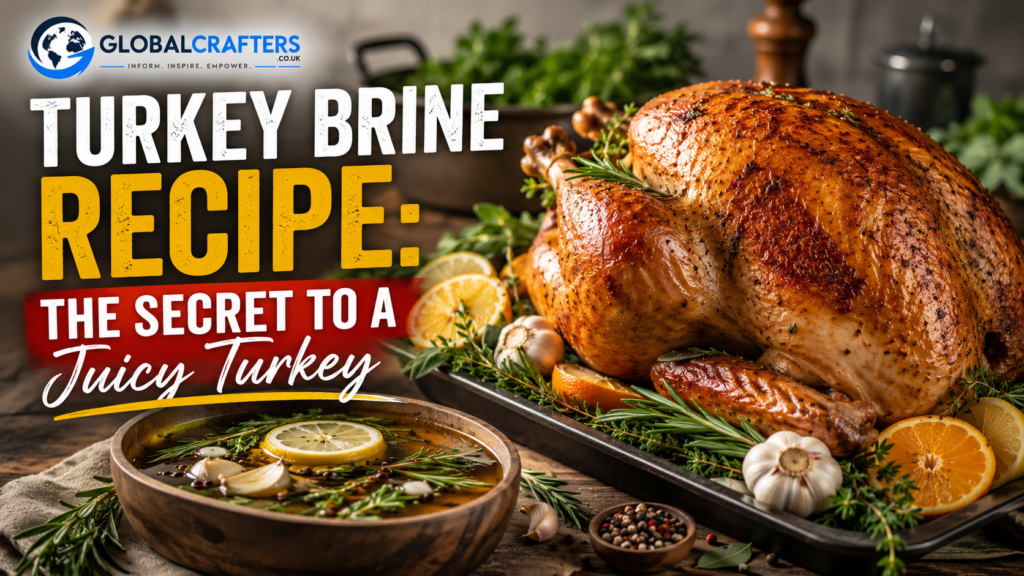

Introduction to Turkey Brine Recipe
If you want a turkey that is moist in the middle, deeply seasoned, and far less likely to turn out dry, a good turkey brine recipe is one of the simplest techniques to add to your holiday cooking routine. Brining gives the turkey time to absorb salt and seasoning before roasting, helping create a more flavorful result from the inside out. It also gives you an opportunity to add fresh herbs, garlic, citrus, peppercorns, and other aromatics without making the actual cooking process complicated.
This turkey brine recipe uses a balanced combination of water, kosher salt, brown sugar, herbs, garlic, citrus, and peppercorns. The result is savory rather than overwhelmingly salty, with enough aromatic flavor to complement traditional turkey dishes such as mashed potatoes, stuffing, gravy, cranberry sauce, and roasted vegetables.
From a practical recipe review perspective, the biggest advantage is preparation. You do not need expensive ingredients or specialized equipment. What matters most is using the correct amount of salt, keeping the turkey properly refrigerated, and drying the bird thoroughly before roasting.
What Makes a Good Turkey Brine Recipe Work?
At its simplest, a turkey brine is a seasoned solution containing salt and water. Salt is the essential ingredient because it seasons the turkey and changes the way the meat retains moisture during cooking. Sugar is optional, but it adds balance and can encourage attractive browning on the skin. Aromatics such as rosemary, thyme, garlic, bay leaves, peppercorns, orange, and lemon provide additional flavor.
A good brine should not simply taste extremely salty. The goal is to create a solution that seasons the turkey without overpowering its natural flavor. Brining overnight is common for whole turkeys, and established turkey recipes from Butterball also use overnight refrigeration for their brined birds.
Another important point is temperature. Raw turkey and the brine need to remain cold during the entire process. USDA guidance recommends keeping refrigerators at 40°F (4.4°C) or below, which is particularly important when storing raw poultry.
Ingredients You Need for This Turkey Brine
For a turkey weighing approximately 12 to 14 pounds, this is a practical starting recipe.
| Ingredient | Amount | Purpose |
|---|---|---|
| Water | 2 gallons total | Forms the brine base |
| Kosher salt | 1 cup | Seasons the turkey |
| Brown sugar | 1/2 cup | Adds mild sweetness and helps browning |
| Garlic | 5–6 cloves | Adds savory depth |
| Fresh rosemary | 3–4 sprigs | Provides herbal flavor |
| Fresh thyme | 5–6 sprigs | Adds a classic turkey aroma |
| Bay leaves | 2–3 | Adds subtle herbal character |
| Black peppercorns | 1 tablespoon | Adds gentle spice |
| Orange | 1, sliced | Adds fresh citrus notes |
| Lemon | 1, sliced | Balances the richness |
| Onion | 1, quartered | Adds savory flavor |
The exact amount of brine required depends on the size and shape of your container. The turkey should be fully surrounded by the liquid, but you should not prepare a huge quantity unnecessarily. A large food safe brining bag can make the process easier because it requires less liquid than a very large open container.
Before brining, check the turkey packaging. Some commercially prepared turkeys are already injected or seasoned with a solution. Adding a full strength brine to an already seasoned bird can result in an excessively salty final dish.
How to Make Turkey Brine
Prepare the Brine
Start by bringing about half of the water to a simmer in a large pot. Add the kosher salt and brown sugar and stir until both ingredients are completely dissolved. Add the garlic, rosemary, thyme, bay leaves, peppercorns, orange, lemon, and onion.
There is no need to aggressively boil the herbs and citrus for a long time. Once the salt and sugar dissolve and the aromatics begin releasing their fragrance, remove the pot from the heat. Add the remaining cold water or ice as needed to bring the mixture down to refrigerator temperature before the turkey is added.
This cooling stage is extremely important. Never place a raw turkey into hot or warm brine. The brine should be completely chilled first.
Brine the Turkey Safely
Remove the turkey from its packaging and take out the neck and giblets if they are included. Place the turkey breast side down in a food safe brining bag, large nonreactive container, or another suitable vessel.
Pour the completely cooled brine over the turkey, making sure the bird is substantially covered. Seal the bag or cover the container and place it in the refrigerator.
For many whole turkeys, approximately 8 to 12 hours of brining is a practical range. Some established recipes use overnight brining, including Butterball’s savory brined turkey recipe.
The key is not simply leaving the turkey in the brine for as long as possible. Excessive brining can make the meat overly salty and affect its texture.
Dry the Turkey Before Roasting
Once the brining period is finished, remove the turkey from the solution and discard the used brine. Do not reuse brine that has been in contact with raw poultry.
Pat the turkey thoroughly dry with paper towels. If you have enough refrigerator space, placing the uncovered turkey on a rack in the refrigerator for several hours can further dry the skin. This extra step can help produce better browning and a more appealing roasted finish.
Do not rinse the turkey merely to remove the brine. Thorough drying is generally more useful for roasting, while rinsing raw poultry can spread contaminated droplets around the kitchen.
How Long Should You Brine a Turkey?
Brining time depends on the turkey’s size, the strength of the brine, and whether you are using a wet or dry method. For the balanced wet brine above, approximately 8 to 12 hours is a useful starting point for a medium whole turkey.
A simple planning guide is:
| Turkey Size | Suggested Brining Window |
| 8–10 lb | About 6–10 hours |
| 10–14 lb | About 8–12 hours |
| 14–18 lb | About 10–14 hours |
| 18–22 lb | About 12–16 hours |
These are practical guidelines rather than strict rules. A smaller turkey does not necessarily need an extremely long soak, and a stronger brine should generally be used for less time.
Always keep the turkey refrigerated while brining. USDA food safety guidance emphasizes keeping poultry cold and limiting exposure to the temperature danger zone.
Wet Brine vs. Dry Brine: Which Is Better?
Both techniques can produce excellent turkey, but they work differently.
| Feature | Wet Brine | Dry Brine |
| Main ingredient | Saltwater solution | Salt applied directly |
| Refrigerator space | More demanding | Easier |
| Extra liquid | Yes | No |
| Flavor | Excellent with herbs and aromatics | Strong turkey flavor |
| Skin browning | Requires careful drying | Often easier |
| Cleanup | More involved | Simpler |
| Best for | Traditional juicy turkey | Easy preparation and crisp skin |
A wet brine is especially appealing if you enjoy experimenting with flavors such as citrus, herbs, garlic, apple, or spices. A dry brine is often more convenient because you do not need to find a container large enough to hold both the turkey and several gallons of liquid.
For a first time cook, however, this turkey brine recipe is a dependable traditional approach because the process is straightforward and forgiving when the salt concentration and refrigeration are handled correctly.
Turkey Brine Recipe Variations Worth Trying
Citrus Herb Turkey Brine
For a bright, classic flavor, increase the orange and lemon while keeping rosemary, thyme, garlic, and bay leaves in the mixture. This version works particularly well when the turkey is served with a lighter gravy or roasted vegetables.
Apple Turkey Brine
Replace part of the water with unsweetened apple cider. Apple brings gentle sweetness and works especially well with sage, thyme, cinnamon, and black pepper.
Garlic and Herb Turkey Brine
If you prefer a savory turkey rather than a sweet one, reduce or omit the brown sugar and emphasize garlic, rosemary, thyme, sage, and black pepper. This is an excellent option for a traditional Thanksgiving style dinner.
Spicy Turkey Brine
For a subtle kick, add crushed red pepper flakes or a small amount of dried chili. Keep the spice moderate because the turkey will absorb the seasoning during the brining period.
Common Turkey Brining Mistakes
One of the most common mistakes is using a turkey that has already been injected with a salt solution. Always read the packaging before brining. If the bird has already been seasoned, a standard brine can make the finished turkey much saltier than expected.
Another mistake is adding the turkey before the brine has cooled. This creates a food safety problem and can raise the temperature of the poultry. The solution should be cold before the turkey goes in.
Failing to dry the turkey is another quality issue. A wet surface makes it harder to achieve deeply browned skin. After removing the turkey from the brine, use paper towels to dry the entire exterior.
Finally, do not assume cooking time alone determines doneness. USDA guidance recommends using a food thermometer and cooking poultry to a minimum internal temperature of 165°F (73.9°C).
Turkey Roasting Tips After Brining
After the turkey has been removed from the brine and dried, place it breast side up on a roasting rack. You can lightly coat the skin with oil or softened butter and add a modest amount of black pepper or herbs. Go easy on additional salt because the turkey has already been seasoned.
Roast according to your turkey’s size and your recipe or manufacturer’s instructions. The oven should generally be at least 325°F (162.8°C) for poultry according to USDA guidance.
The most important tool is an accurate meat thermometer. Check the thickest areas of the turkey without touching bone. The turkey should reach at least 165°F internally for food safety.
Once cooked, allow the turkey to rest before carving. Resting gives the juices time to redistribute and makes the meat easier to slice neatly.
For food safety after the meal, refrigerate leftovers promptly. USDA guidance recommends refrigerating leftovers at 40°F or below and generally using cooked leftovers within 3 to 4 days.
Final Verdict on This Turkey Brine Recipe
This turkey brine recipe is worth keeping if your priority is a flavorful, juicy centerpiece without complicated preparation. The combination of kosher salt, brown sugar, garlic, fresh herbs, citrus, and peppercorns gives the turkey a classic savory profile while leaving plenty of room for your preferred gravy, stuffing, and side dishes.
The real secret is not an exotic ingredient. It is technique: use a properly balanced brine, cool it completely, keep the turkey refrigerated, avoid over brining, dry the bird thoroughly, and use a thermometer rather than guessing when it is done.
If you are preparing your first Thanksgiving turkey or simply want a reliable holiday recipe, this is a strong starting point. It gives you the flexibility to customize the aromatics while keeping the fundamentals simple and food safe.
You may also read more blogs
Chicken Salad Chick Review
Frequently Asked Questions About Turkey Brine
Is brining a turkey really worth it?
Yes, particularly if you are concerned about dry turkey. Brining seasons the meat before cooking and can help produce a more flavorful, moist result. It is especially useful for large holiday turkeys that may otherwise become dry during roasting.
Can I brine a turkey overnight?
Yes. Overnight brining is a common approach, and established turkey recipes use overnight refrigeration. For this recipe, around 8 to 12 hours is a practical target for many medium sized turkeys.
Should I rinse my turkey after brining?
Rinsing is generally unnecessary. Remove the turkey from the brine and pat it thoroughly dry with paper towels. Avoid splashing raw poultry juices around your kitchen.
Can I brine a frozen turkey?
The turkey should be completely thawed before using this wet brine. USDA recommends refrigerator thawing as a safe method and advises allowing roughly 24 hours per 5 pounds of turkey when thawing in the refrigerator.
What salt should I use for turkey brine?
Kosher salt is a convenient choice, but salt brands and crystal sizes vary. If substituting another type of salt, avoid blindly using the same volume because the amount of actual salt can differ substantially.
Can I reuse turkey brine?
No. Once raw turkey has been sitting in the brine, discard it. Do not reuse the liquid for another turkey or other food.
How do I get crispy turkey skin after brining?
Dry the turkey extremely well after removing it from the brine. If refrigerator space allows, leaving it uncovered on a rack for several hours can help dry the skin further before roasting.
What if my turkey is already seasoned?
Check the package carefully for wording such as “contains up to X% solution” or other indications that the turkey has been injected or enhanced. Such birds may already contain significant salt, so a full wet brine may not be appropriate.