
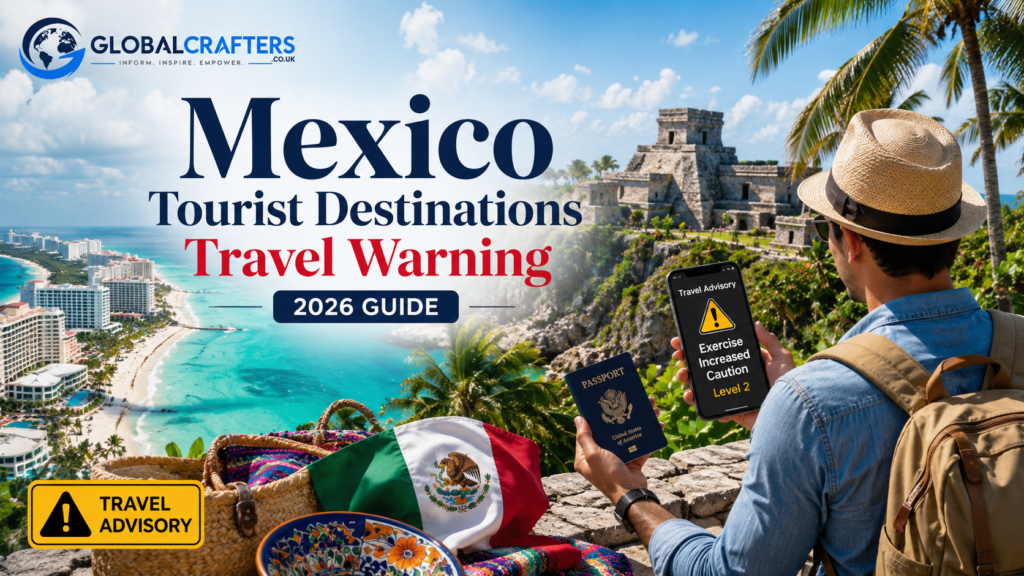

Mexico remains one of the world’s most popular vacation destinations, offering Caribbean beaches, ancient Maya ruins, colonial cities, vibrant food culture, and lively resort towns. However, travelers searching for a Mexico tourist destinations travel warning should understand that safety conditions vary significantly from one state and destination to another.
As of 2026, the U.S. Department of State rates Mexico overall at Level 2: Exercise Increased Caution because of crime, kidnapping, and terrorism risks. Importantly, this countrywide rating does not mean every Mexican destination carries the same level of risk. Some states are rated Level 1, while others have significantly stronger warnings.
This guide explains the latest Mexico travel warning, highlights popular tourist destinations, identifies areas requiring greater caution, and provides practical safety advice for travelers.
Is Mexico Safe for Tourists in 2026?
Mexico can be a rewarding destination for tourists, but travelers should research their specific destination before booking a trip.
The U.S. State Department’s current advisory rates Mexico at Level 2: Exercise Increased Caution. The main concerns listed are terrorism, crime, and kidnapping. The advisory also makes clear that some areas of Mexico have considerably higher risks than others.
The UK Foreign, Commonwealth & Development Office similarly warns that crime can affect foreign nationals, particularly in major cities and tourist resort areas. It recommends researching destinations carefully, monitoring local information, and avoiding unnecessary travel after dark in higher-risk situations.
Therefore, the best approach is not to ask whether all of Mexico is safe or unsafe. Instead, travelers should ask:
- What is the advisory level for my destination?
- What areas should I avoid?
- How should I travel around the destination?
- Are there specific risks at night?
- What precautions should I take?
Mexico Travel Advisory Levels Explained
Travel advisories generally use different levels to communicate the degree of risk.
Level 1 – Exercise Normal Precautions: Travelers should follow ordinary safety precautions.
Level 2 – Exercise Increased Caution: Travelers should be more alert because of identified risks such as crime or terrorism.
Level 3 – Reconsider Travel: Travelers should seriously reconsider whether the trip is necessary because of significant safety concerns.
Level 4 – Do Not Travel: Travelers are advised not to visit because the risks are considered particularly serious.
The current U.S. advisory places Mexico overall at Level 2, but individual states have different ratings.
Best Mexico Tourist Destinations to Consider
Mexico has dozens of destinations suitable for different types of travelers. From beach resorts to historic cities, the following locations remain among the country’s most popular choices.
Cancún
Cancún is one of Mexico’s best-known international tourist destinations. Its beaches, large resorts, restaurants, nightlife, and proximity to Maya archaeological sites attract millions of visitors.
Cancún is located in Quintana Roo, which currently carries a Level 2: Exercise Increased Caution rating from the U.S. State Department. Travelers are advised to pay attention to their surroundings after dark and remain in well-lit pedestrian streets and established tourist zones.
Travelers should also be aware that the wider region can experience violent incidents connected to criminal groups. The UK government advises particular caution after dark in downtown Cancún and other popular tourist areas.
Playa del Carmen
Playa del Carmen combines Caribbean beaches with restaurants, shopping, nightlife, and easy access to Riviera Maya attractions.
Because Playa del Carmen is also in Quintana Roo, the same state-level travel advisory applies. Visitors should stay alert, particularly at night, and avoid isolated streets and poorly lit areas.
The UK government specifically advises travelers to exercise caution after dark in Playa del Carmen and remain within well-lit pedestrian streets and tourist zones.
Tulum
Tulum is famous for its Maya ruins, beaches, cenotes, boutique hotels, and wellness-oriented travel experiences.
Like Cancún and Playa del Carmen, Tulum is located in Quintana Roo, which is currently under a Level 2 U.S. advisory. Travelers should therefore use increased caution rather than assuming that a popular resort destination is completely risk-free.
Tulum is particularly attractive for travelers who want to combine beach time with cultural sightseeing. Visitors should use reputable transportation, avoid walking alone in isolated locations at night, and keep valuables secure.
Cozumel
Cozumel is an island destination known for diving, snorkeling, coral reefs, beaches, and cruise tourism.
It is also located in Quintana Roo and falls under the state’s current Level 2 advisory. Travelers should follow the same basic precautions recommended for other destinations in the region.
For visitors interested in water activities, Cozumel can be an excellent choice, particularly when excursions are booked through established operators.
Puerto Vallarta
Puerto Vallarta is one of Mexico’s most popular Pacific Coast destinations, known for beaches, mountain scenery, restaurants, resorts, and its historic downtown.
Although Jalisco has a Level 3: Reconsider Travel advisory from the U.S. State Department, the advisory specifically states that there are no U.S. government employee travel restrictions for Puerto Vallarta and neighboring Riviera Nayarit.
This distinction is important. A state-level warning does not necessarily mean that every city or tourist zone within that state has the same restrictions.
Los Cabos
Los Cabos, including Cabo San Lucas and San José del Cabo, is another major Mexican resort destination.
Baja California Sur is currently rated Level 2: Exercise Increased Caution by the U.S. State Department.
Travelers can enjoy beaches, resorts, restaurants, boating, and desert landscapes while following normal tourist safety measures and paying attention to local conditions.
Mexico City
Mexico City offers a completely different travel experience from the country’s beach resorts. Visitors can explore museums, historic architecture, markets, parks, restaurants, and cultural attractions.
The city requires greater urban awareness because, like many large metropolitan areas, it experiences street crime and other security concerns. Travelers should take particular care with phones, wallets, bags, and transportation.
Using reputable transportation services and avoiding unfamiliar areas late at night can reduce unnecessary risks.
Mérida
Mérida is an attractive option for travelers interested in history, architecture, food, and Yucatán culture.
The U.S. State Department currently rates Yucatán at Level 1: Exercise Normal Precautions, making it one of the Mexican states with the lowest advisory level in the current U.S. system.
Mérida also provides convenient access to attractions such as Chichén Itzá and other historic sites.
Campeche
Campeche is another destination worth considering for travelers interested in Mexico’s colonial heritage.
The state of Campeche currently carries a Level 1: Exercise Normal Precautions rating in the U.S. advisory.
Its historic center, colorful architecture, coastal setting, and cultural attractions make it an appealing alternative to Mexico’s busier resort destinations.
Which Areas of Mexico Have Stronger Travel Warnings?
Travelers should pay particular attention to areas carrying Level 3 or Level 4 advisories.
The current U.S. advisory lists several Mexican states under higher warning levels. Baja California, for example, is rated Level 3 because of terrorism, crime, and kidnapping. Morelos is also Level 3.
Travelers should also check specific warnings for areas of states such as Jalisco and Guerrero because conditions can vary substantially within a state.
The UK government currently advises against all but essential travel to parts of Baja California, Guerrero, and Chiapas, among other specific areas and routes.
This is why travelers should always check the latest government advisory immediately before departure rather than relying on an old travel article.
Places to Avoid or Approach With Extra Caution
Some areas of Mexico carry significantly stronger warnings than the country’s major resort destinations.
Under the current U.S. advisory, travelers should not travel to certain areas including Colima, Sinaloa, and Tamaulipas. Several other states have Level 3 warnings.
This does not mean that every location in Mexico is dangerous. It means that travelers should carefully distinguish between destinations and avoid assuming that a warning for one state applies equally to another.
If your itinerary involves remote roads, border areas, or destinations with a higher advisory level, conduct additional research and consider changing your route when appropriate.
Mexico Travel Safety Tips for Tourists
Even in popular tourist destinations, simple precautions can make your trip safer.
Stay in Established Tourist Areas
Hotels and resorts in established tourist zones generally provide easier access to transportation, security, restaurants, and tourist services.
Avoid wandering into unfamiliar neighborhoods simply because they appear close to a tourist attraction.
Be More Careful After Dark
Several official travel advisories specifically highlight increased risks after dark in certain tourist destinations.
When going out at night, stay in busy, well-lit areas and use reputable transportation rather than walking through isolated streets.
Protect Your Valuables
Do not display large amounts of cash, expensive jewelry, or expensive electronics unnecessarily.
Keep your passport and important documents secure and carry only what you need for the day.
Use Reputable Transportation
Choose transportation from established hotels, licensed providers, or reputable ride-hailing services where available.
If traveling between cities by bus, research the route and operator beforehand. The UK government notes that bus hijacking is a risk in some areas and recommends first-class buses using toll roads when possible.
Avoid Demonstrations
Political demonstrations can occur in Mexican cities and may disrupt roads and transportation.
Foreign nationals can face legal consequences for participating in political activities in Mexico. The UK government advises travelers to avoid demonstrations and monitor local media.
Keep Emergency Information Accessible
Before leaving home, save your hotel’s contact information, travel insurance details, passport information, and relevant embassy or consulate contacts.
It is also wise to share your itinerary with someone you trust.
Is Cancun Safe to Visit?
Cancún remains a major international tourist destination, but travelers should not ignore the current Level 2 advisory for Quintana Roo.
The U.S. State Department specifically recommends increased caution in Quintana Roo and advises travelers to pay attention to their surroundings after dark and remain in well-lit tourist areas.
Cancún can therefore still be included in a Mexico vacation, but travelers should use sensible precautions, particularly at night.
Is Tulum Safe to Visit?
Tulum remains a popular destination for international visitors, but it is not completely free from crime.
Because Tulum is located in Quintana Roo, travelers should follow the state’s Level 2 advisory and take additional care after dark.
Stay in established areas, use reputable transportation, secure valuables, and avoid isolated locations when traveling at night.
Is Puerto Vallarta Safe to Visit?
Puerto Vallarta remains an important tourist destination, and the U.S. advisory makes a distinction between the wider state of Jalisco and Puerto Vallarta itself.
Although Jalisco is rated Level 3, the U.S. government currently states that there are no travel restrictions for U.S. government employees in Puerto Vallarta and neighboring Riviera Nayarit.
Travelers should still monitor conditions and follow normal precautions.
Is Mérida One of the Safer Mexico Destinations?
Mérida is located in Yucatán, which currently has a Level 1: Exercise Normal Precautions U.S. advisory.
For travelers prioritizing a lower advisory level, Mérida can therefore be an appealing destination.
It also offers a strong combination of cultural attractions, historic architecture, local cuisine, and access to important archaeological sites.
Mexico Tourist Destinations Travel Warning: What Travelers Should Know
The biggest mistake travelers can make is treating a countrywide travel warning as though every destination has identical conditions.
Mexico is a large country with substantial differences between states and cities. A beach resort in Quintana Roo, a colonial city in Yucatán, a major metropolitan area such as Mexico City, and a remote border region can have very different security environments.
Current official advisories demonstrate this clearly: Yucatán and Campeche are Level 1, many states including Quintana Roo are Level 2, some states are Level 3, and certain areas have Level 4 warnings.
For that reason, travelers should research their exact destination rather than simply searching for a general answer to “Is Mexico safe?”
Should You Cancel a Trip to Mexico Because of a Travel Warning?
Not necessarily.
A travel advisory is designed to help travelers understand potential risks and make informed decisions. It does not automatically mean that every tourist should cancel a vacation.
The appropriate decision depends on your destination, travel style, itinerary, transportation, accommodation, and personal comfort with risk.
If your trip includes a destination under a high-level warning, reconsidering the itinerary may be sensible. If you are visiting a destination with a lower advisory level, you should still follow appropriate safety precautions.
Travel insurance is also worth considering. The U.S. State Department recommends purchasing travel insurance and checking whether it includes medical care, evacuation assistance, and trip cancellation coverage.
Final Thoughts
Mexico continues to offer an enormous variety of travel experiences, from the beaches of Cancún and Tulum to the cultural attractions of Mexico City and Mérida.
However, the latest Mexico tourist destinations travel warning shows why travelers should research individual destinations rather than making assumptions about the entire country. Mexico currently has a Level 2 overall U.S. travel advisory, while individual states range from Level 1 to significantly higher warning levels.
For a safer and more enjoyable trip, check the latest government advisory before departure, stay informed about local conditions, use reputable transportation, avoid isolated areas at night, protect your belongings, and follow instructions from local authorities.
Travel warnings can change, so always verify the latest information shortly before your trip.
You may also read more blogs
Best Places to Travel With Kids
Frequently Asked Questions
Is Mexico safe for tourists in 2026?
Mexico can be visited safely by many tourists, but safety varies by destination. The current U.S. advisory rates Mexico overall at Level 2, or Exercise Increased Caution, because of crime, kidnapping, and terrorism.
What is the current Mexico travel warning?
The U.S. State Department currently rates Mexico at Level 2: Exercise Increased Caution. Individual states have different advisory levels, so travelers should check the specific destination.
What are some lower-warning destinations in Mexico?
Yucatán and Campeche currently have a U.S. Level 1 advisory. Mérida and Campeche are therefore options for travelers who want destinations with a lower official advisory level.
Is Cancún under a travel warning?
Cancún is located in Quintana Roo, which currently has a Level 2 U.S. advisory. Travelers should exercise increased caution and be particularly aware of their surroundings after dark.
Is Tulum safe for tourists?
Tulum remains a popular tourist destination, but it is in Quintana Roo, a Level 2 state. Visitors should use increased caution, particularly at night and in less populated areas.
Which parts of Mexico should tourists avoid?
Travelers should review the latest state-specific advisories before planning their route. The current U.S. advisory includes Level 4 “Do Not Travel” warnings for certain states and Level 3 warnings for several others.
Should I buy travel insurance for Mexico?
Travel insurance can provide valuable protection for medical emergencies, evacuation, trip cancellation, and other unexpected situations. Travelers should carefully review the policy before purchasing it.
Can travel warnings change?
Yes. Government travel advisories can be updated when security conditions change. Always check the latest official advisory shortly before departure.