
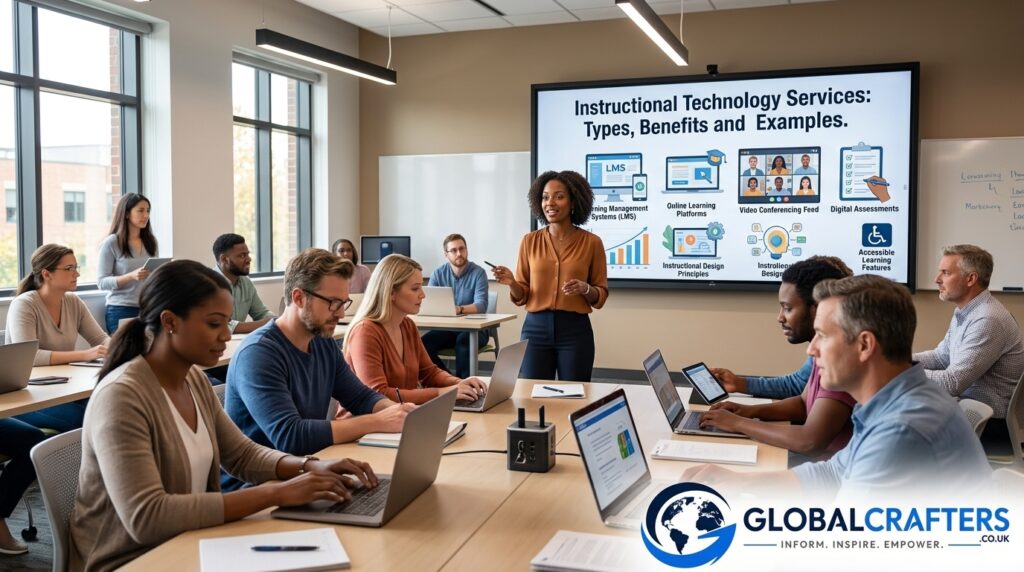

Instructional technology services help educators and organisations use technology in ways that improve teaching, learning, communication and student support. Rather than simply providing technical assistance, these services connect educational goals with appropriate digital tools, course design practices and learning environments. Depending on the organisation, the service may include instructional design, learning management system support, classroom technology, multimedia production, accessibility guidance, technology training and consultation.
The importance of this work has grown as education has moved beyond traditional classrooms. Online courses, hybrid teaching, digital assessments, recorded lectures, collaborative platforms and AI powered learning tools have created more opportunities for educators, but they have also introduced new challenges. Effective instructional technology services help institutions choose appropriate solutions and use them in ways that support actual learning outcomes rather than adopting technology simply because it is new.
What Are Instructional Technology Services?
Instructional technology services are professional services designed to help educators and organisations effectively select, implement and use technologies for teaching and learning. They can involve both technical and pedagogical expertise, meaning the focus is not only on whether a platform works but also on whether it helps instructors teach and students learn more effectively.
EDUCAUSE describes educational technology consulting and training services as support that gives faculty and course creators the knowledge and assistance needed to optimise their use of teaching and learning technologies. Its broader definition of educational technology services includes instructional support staff, learning management systems, e-portfolios, assessment systems and collaboration tools.
This makes instructional technology different from conventional IT support. General IT may focus on devices, networks, accounts and software problems, while instructional technology teams concentrate specifically on the educational application of technology. For example, an instructional technologist might help an instructor redesign an online course in Canvas, improve a digital assessment, record a lecture or make course materials more accessible.
What Do Instructional Technology Services Include?
Instructional technology services can vary considerably between organisations. A university may have a dedicated instructional technology department, while a school district or private training provider may use a smaller educational technology team or external service provider.
Instructional design and course development
Instructional design is one of the most important components of instructional technology services. It involves planning learning experiences around objectives, content, activities, assessments and the needs of learners.
Instructional designers can work with educators to develop new online courses, improve existing courses or convert face-to-face teaching into hybrid or online formats. The University of Florida, for example, provides instructional design support for online, flipped, hybrid and traditional courses, including course development, revision and accessibility-focused improvements.
Good instructional design ensures that technology supports pedagogy rather than becoming a distraction. A video, interactive quiz or discussion board should have a clear educational purpose and connect with the intended learning outcomes.
Learning management system support
Learning management systems, commonly called LMS platforms, are central to many modern educational environments. Platforms such as Canvas, Blackboard and other course management systems can host learning materials, assignments, assessments, discussions and grades.
Instructional technology specialists may help educators create courses, organise modules, configure activities, troubleshoot platform features and identify better ways to use LMS tools. Some teams also provide training sessions and one to one consultations so instructors can become more confident using their institution’s technology.
Classroom and learning technology
Instructional technology services can also support physical and virtual learning environments. This may include classroom presentation systems, interactive displays, lecture capture, video conferencing, microphones, cameras and other educational media.
For example, Wright State University’s instructional technology team supports classroom technologies alongside platforms and tools used for online teaching, assessment and collaboration.
The objective is not simply to install equipment. Effective support helps instructors understand how to use technology during teaching and reduces disruption when technical problems occur.
Digital media and content development
Video, audio, graphics, screen recordings, animations and interactive materials can make educational content more engaging and flexible. Instructional technology teams may assist with recording lectures, editing educational videos, producing captions and creating interactive learning resources.
Indiana University identifies media and innovation as part of its teaching and learning technology services, including strategically designed videos, graphics and interactive games intended to support instructional activities.
Well designed multimedia can also support learners who need to review material more than once or who access content outside traditional classroom hours.
Training and professional development
Even the best educational technology has limited value if instructors do not know how to use it effectively. Training is therefore a major part of instructional technology services.
Professional development can cover LMS features, digital assessment, video tools, online teaching techniques, accessibility, collaboration platforms, AI tools and other emerging technologies. Training may be delivered through workshops, demonstrations, online resources, individual consultations or department specific sessions.
North Carolina A&T State University, for example, describes instructional technology services as providing professional development and assistance to faculty and staff while helping them incorporate emerging technologies into online, blended and face to face instruction.
Accessibility and inclusive learning
Accessibility is another essential area. Digital learning materials need to be usable by learners with different abilities, devices and circumstances.
Accessibility support may include reviewing documents, presentations, websites, videos and online course materials; improving headings and alternative text; providing captions and transcripts; checking colour contrast; and advising educators on accessible course design.
The University of Florida notes that accessible course design can include multiple ways of presenting information, captions and transcripts, logical heading structures and alternative text for images.
Accessibility should ideally be considered when a course or resource is first designed rather than added as an afterthought. This can improve usability for a much wider group of learners, not only those with formally identified disabilities.
Why Instructional Technology Services Matter
Technology can expand educational possibilities, but technology alone does not guarantee better learning. Instructional technology services provide the expertise needed to connect digital tools with educational objectives.
Improving teaching and learning
Educators can use technology to provide additional learning resources, facilitate collaboration, deliver interactive activities and offer students more flexible access to course materials. Instructional technology professionals help ensure these tools are selected and implemented intentionally.
San Diego State University’s Instructional Technology Services describes its role as supporting effective uses of academic technologies, enhancing learning and facilitating pedagogical research and strategic initiatives related to student success.
Supporting student engagement
Interactive activities, multimedia, online discussions, digital simulations and formative assessments can create additional opportunities for students to participate. However, engagement should not be confused with simply adding more technology.
An effective instructional technology strategy considers what students need to accomplish and selects tools that make that process clearer, more interactive or more accessible.
Helping educators adopt technology effectively
Teachers and instructors may have limited time to evaluate dozens of platforms and features. Instructional technology professionals can provide practical recommendations based on learning objectives, course requirements, usability and institutional systems.
This consultative role is particularly valuable when an organisation is considering a new LMS, video platform, assessment system or AI enabled educational tool.
Creating more accessible learning experiences
Accessible digital content can help remove barriers to learning. Accessibility guidance may cover course materials, videos, documents, websites and learning platforms.
For example, North Carolina’s Department of Public Instruction recommends practices such as adding alternative text, using structured headings, providing accessible formats and captioning videos for digital instructional materials.
Common Examples of Instructional Technology Services
The exact service package depends on the institution, but common examples include:
| Service | Typical purpose |
|---|---|
| Instructional design | Improve course structure and learning activities |
| LMS support | Develop and manage online courses |
| Classroom technology | Support technology enabled teaching spaces |
| Lecture capture | Record and distribute teaching sessions |
| Multimedia production | Create educational videos, graphics and interactive resources |
| Accessibility support | Improve access to digital learning materials |
| Faculty training | Build confidence with educational technologies |
| Technology consultation | Match tools with teaching and learning objectives |
| Learning analytics | Use educational data to understand learner activity and outcomes |
Some institutions combine several of these functions into a central teaching and learning technology department. Others distribute them between instructional design, academic technology, accessibility and IT teams.
Who Uses Instructional Technology Services?
Instructional technology services are primarily associated with education, but their applications extend beyond traditional universities.
Schools and colleges
Schools can use instructional technology support to help teachers integrate digital resources, manage learning platforms, develop multimedia lessons and provide accessible learning materials.
Universities
Higher education institutions often have more specialised requirements, including online degree programmes, hybrid learning, lecture capture, digital assessment and faculty development. Their instructional technology teams may therefore include instructional designers, learning technologists, multimedia specialists and accessibility professionals.
Corporate learning teams
Businesses can also benefit from instructional technology expertise when developing employee training, onboarding programmes, compliance courses and professional development. Learning management systems, video training and digital assessments can help organisations deliver education at scale.
Educators and instructional designers
Individual educators can seek instructional technology support when they need assistance choosing a platform, improving an online course, creating multimedia content or solving a teaching challenge involving technology.
How to Choose Instructional Technology Services
Choosing an instructional technology provider should involve more than comparing the number of platforms it supports. The quality of the educational expertise behind the service is equally important.
Evaluate expertise and educational experience
Look for professionals who understand instructional design, teaching practices and learner needs. Technical knowledge is valuable, but it should be combined with an understanding of pedagogy.
Check technology and platform support
Identify which systems the provider supports. Depending on your organisation, this might include an LMS, video platform, assessment software, collaboration tools, classroom technology or content authoring systems.
Consider accessibility
Ask how the provider evaluates accessibility and whether accessibility is incorporated into course design and technology selection. Providers should understand recognised accessibility principles and be able to help educators create usable digital materials.
Look for training and ongoing support
A strong service should not end when a platform is installed or a course is launched. Ongoing training, documentation, consultations and technical assistance can help educators make better use of technology over time.
The Future of Instructional Technology Services
Instructional technology services are likely to become increasingly strategic as educational organisations adopt AI, learning analytics, immersive technologies and more flexible learning models.
Artificial intelligence is already creating new questions around teaching, assessment, academic integrity, content creation and personalised learning. Instructional technology professionals can help educators evaluate where AI provides genuine educational value while considering privacy, reliability, accessibility and responsible use.
Learning analytics is another important area. Data from learning platforms can help institutions understand patterns of engagement and identify opportunities to improve course design. However, analytics should support informed educational decisions rather than replacing professional judgement.
The future of instructional technology is therefore not simply about adding more digital tools. It is about helping organisations make thoughtful technology decisions that improve learning experiences, support educators and provide equitable access to education.
Conclusion
Instructional technology services have become an important part of modern education because technology now influences how courses are designed, delivered, assessed and accessed. Effective services bring together instructional design, educational technology, training, multimedia, accessibility and technical expertise to create better learning environments.
The strongest approach is not to adopt technology for its own sake. Instead, educators and organisations should begin with learning objectives, understand their learners and then select technologies that solve genuine teaching or learning challenges. With the right strategy and professional support, instructional technology can help educators deliver more flexible, accessible and engaging learning experiences.
You may also read more blogs
People Magazine Cover This Week
Frequently Asked Questions
What are instructional technology services?
Instructional technology services are professional services that help educators and organisations use technology effectively for teaching and learning. They can include instructional design, LMS support, faculty training, multimedia production, classroom technology, accessibility guidance and educational technology consultation.
What is the difference between instructional technology and IT?
General IT typically focuses on infrastructure, devices, networks, software and technical support. Instructional technology focuses specifically on using technology to improve teaching, learning, course design, assessment and educational experiences.
What does an instructional technology specialist do?
An instructional technology specialist helps educators select, implement and use educational technologies. Their work may include LMS support, course design, technology training, accessibility guidance, multimedia development and consultations about digital teaching strategies.
Why is instructional technology important in education?
Instructional technology can make learning more flexible, interactive and accessible when it is used appropriately. Specialist support helps educators connect technology with learning objectives instead of using digital tools without a clear educational purpose.
What technologies are used in instructional technology?
Common technologies include learning management systems, video conferencing platforms, lecture capture systems, digital assessment tools, collaboration software, multimedia tools and accessibility technologies. The most appropriate technology depends on the learning objectives and users.
How does instructional technology support online learning?
Instructional technology supports online learning through course design, LMS configuration, digital content creation, video and multimedia, online assessments, accessibility support and instructor training. These services help create structured and usable digital learning environments.
Is instructional technology only for universities?
No. Instructional technology can support schools, colleges, universities, training providers, government organisations and corporate learning teams. Any organisation that uses technology to deliver or support learning can potentially benefit from these services.
How should an organisation choose an instructional technology provider?
An organisation should consider the provider’s instructional design expertise, technology experience, accessibility knowledge, training capabilities, supported platforms and ongoing support. The best provider should understand both technology and the educational goals behind its use.