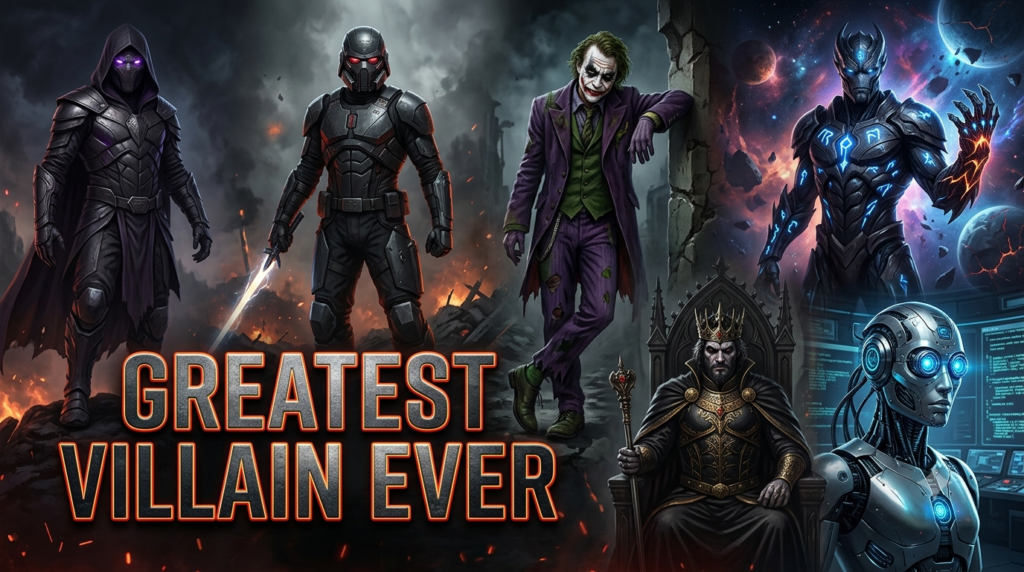

Greatest Villain Ever Explained
The phrase greatest villain ever has fascinated fans for decades because every generation has produced unforgettable antagonists who challenge heroes in unique ways. Whether they appear in blockbuster films, bestselling novels, television dramas, comic books, anime, or video games, great villains become cultural icons that often rival or even surpass the popularity of the heroes themselves.
A memorable villain is far more than someone who commits evil acts. The greatest antagonists possess compelling personalities, understandable motivations, intelligence, charisma, and the ability to make audiences emotionally invested. Their presence raises the stakes of every story, creating unforgettable conflicts that remain relevant long after the credits roll.
What Makes a Villain Truly Great
A legendary villain combines several qualities that elevate them above ordinary antagonists. They have believable goals, unique personalities, strategic intelligence, emotional depth, and memorable dialogue. Their actions influence the story in meaningful ways while forcing heroes to grow stronger.
Another defining trait is longevity. The greatest villains continue to inspire discussions decades after their first appearance. Fans revisit their stories, quote their lines, analyze their motivations, and debate whether they were entirely evil or simply misunderstood.
Why Audiences Love Great Villains
Ironically, audiences often remember villains more vividly than heroes. Villains break societal rules, possess extraordinary confidence, and frequently deliver the most dramatic moments in a story. Their unpredictability creates suspense that keeps viewers engaged.
Psychologists also suggest that fictional villains allow audiences to safely explore darker aspects of human nature. Rather than admiring evil itself, viewers become fascinated by complex characters who challenge traditional morality.
What Is the Greatest Villain Ever
The answer depends largely on personal preferences and the type of stories people enjoy. Some value psychological complexity, while others prioritize power, intelligence, emotional impact, or cultural influence.
Across countless rankings published by entertainment magazines, critics, and fan communities, several names consistently appear near the top. These villains have influenced generations of storytellers and continue inspiring new adaptations.
The Qualities That Define Legendary Villains
The greatest villains usually share these characteristics:
- Clear motivation
- Strong intelligence
- Emotional complexity
- Memorable appearance
- Lasting cultural impact
- Outstanding dialogue
- Powerful rivalry with the hero
- Unpredictable behavior
These elements create unforgettable characters that audiences discuss for decades.
Why There Is No Universal Answer
Different genres produce different types of villains. Horror fans may choose Hannibal Lecter, comic fans often prefer The Joker or Thanos, while science fiction enthusiasts frequently nominate Darth Vader.
Because storytelling styles vary across media, there can never be one universally accepted greatest villain ever.
Greatest Movie Villains
Cinema has introduced some of history’s most recognizable antagonists. Their performances, dialogue, and visual designs continue influencing filmmakers around the world.
Many movie villains become household names because they represent timeless themes including corruption, revenge, fear, obsession, and the abuse of power.
Darth Vader
Darth Vader remains one of cinema’s greatest villains thanks to his intimidating appearance, unforgettable breathing, tragic backstory, and redemption arc. His journey from Anakin Skywalker to Sith Lord created one of film history’s most emotionally powerful narratives.
Rather than existing as pure evil, Vader demonstrates how fear, manipulation, and loss can transform even the most heroic individual into a terrifying villain.
The Joker
The Joker stands among the greatest fictional villains because every version presents chaos in a different form. Whether portrayed as a criminal mastermind, anarchist, or psychological manipulator, he constantly challenges Batman’s moral principles.
His unpredictability makes him terrifying. Audiences never know what he will do next, making every appearance memorable.
Hannibal Lecter
Hannibal Lecter changed the psychological thriller genre forever. His intelligence, refined manners, and disturbing calmness create a villain unlike traditional monsters.
Anthony Hopkins’ performance transformed Lecter into one of Hollywood’s most iconic characters despite relatively limited screen time.
Lord Voldemort
The central antagonist of the Harry Potter series embodies the pursuit of immortality and absolute power. His obsession with pure blood supremacy mirrors real world themes of prejudice and dictatorship.
His influence extends across every major event in the series, making him one of literature and cinema’s greatest villains.
Anton Chigurh
Known for his emotionless personality and terrifying philosophy, Anton Chigurh represents fate, inevitability, and moral chaos. His calm demeanor contrasts sharply with his brutal actions, creating unforgettable suspense.
Greatest Comic Book Villains
Comic books have introduced villains whose popularity rivals superheroes themselves. Many have become central figures in blockbuster films and television adaptations.
These villains evolve continuously through decades of storytelling while remaining instantly recognizable.
Thanos
Thanos gained worldwide recognition through the Marvel Cinematic Universe. Unlike many villains motivated purely by greed, he genuinely believes his catastrophic actions will save the universe.
His philosophical beliefs create ethical debates that continue long after audiences finish watching his stories.
Magneto
Magneto remains one of Marvel’s most morally complex villains. Having survived unimaginable suffering, he believes extreme methods are necessary to protect mutantkind.
Many readers sympathize with his goals while rejecting his violent methods, making him one of comic history’s richest characters.
Doctor Doom
Doctor Doom combines genius level intelligence, magical abilities, political authority, and overwhelming ambition. His pride often becomes his greatest weakness despite his extraordinary capabilities.
He continues appearing in countless Marvel stories because of his complexity and versatility.
Green Goblin
Norman Osborn’s transformation into the Green Goblin creates one of Spider Man’s most personal enemies. His psychological instability and manipulation make him exceptionally dangerous.
His attacks often target Peter Parker emotionally rather than physically.
Greatest Television Villains
Television allows villains to develop over multiple seasons, giving writers opportunities to explore their motivations in greater depth.
Long form storytelling often creates villains who feel remarkably realistic.
Gus Fring
Gus Fring’s calm professionalism masks ruthless ambition. His careful planning, business intelligence, and emotional restraint make him one of television’s smartest criminals.
His dual identity as a respected businessman and drug kingpin remains one of modern television’s greatest character achievements.
Cersei Lannister
Cersei transforms from an ambitious queen into one of television’s most feared rulers. Her fierce determination to protect her family drives increasingly destructive decisions.
Despite her cruelty, audiences understand the emotional forces shaping many of her choices.
Homelander
Homelander represents the terrifying consequences of unlimited power without accountability. His insecurity, narcissism, and emotional instability create constant unpredictability.
He has become one of the defining television villains of the modern streaming era.
Greatest Anime Villains
Anime frequently explores philosophical themes through memorable antagonists whose motivations extend far beyond simple conquest.
Many anime villains possess tragic histories that make audiences question traditional definitions of good and evil.
Frieza
Frieza became one of anime’s earliest globally recognized villains through Dragon Ball. His overwhelming strength, arrogance, and cruelty made him an unforgettable enemy.
Even decades later, he remains among anime’s most famous antagonists.
Madara Uchiha
Madara’s vision for peace through absolute control creates one of Naruto’s deepest ideological conflicts.
Rather than seeking destruction for its own sake, he genuinely believes his plan will eliminate suffering.
Johan Liebert
Monster introduces Johan as a psychological villain whose manipulation and intelligence surpass physical violence.
His calm demeanor and mysterious personality continue fascinating anime fans worldwide.
Griffith
Griffith’s transformation in Berserk remains one of manga and anime’s most emotionally devastating character arcs.
His ambition ultimately costs countless lives while redefining the story forever.
Greatest Video Game Villains
Interactive storytelling allows players to experience conflicts with villains more personally than other media.
Video game antagonists often remain memorable because players actively confront them throughout lengthy adventures.
Sephiroth
Sephiroth combines incredible power with tragic origins, unforgettable music, and one of gaming’s most iconic rivalries.
His influence extends far beyond Final Fantasy fans.
GLaDOS
Portal’s artificial intelligence blends humor with cruelty, creating a villain unlike traditional action antagonists.
Her sarcastic dialogue remains among gaming’s most quoted writing.
Vaas Montenegro
Vaas revolutionized modern gaming villains through his unpredictable personality and psychological intimidation.
His famous speeches continue influencing video game storytelling.
Bowser
Bowser has entertained generations of gamers as Mario’s primary rival.
Although less psychologically complex than modern villains, his lasting popularity proves that memorable design and consistent storytelling create timeless antagonists.
Why Is the Greatest Villain Ever Still Debated
The debate continues because storytelling constantly evolves. Every decade introduces new villains who resonate with changing audiences and cultural themes.
Streaming platforms, comics, anime, novels, and video games all contribute fresh candidates for the title, ensuring discussions remain active across fan communities.
Popular Opinions
Online rankings frequently place Darth Vader, The Joker, Hannibal Lecter, Thanos, and Voldemort near the top.
Anime fans often champion Johan Liebert or Griffith, while gamers frequently support Sephiroth or GLaDOS.
Fan Discussions
Social media discussions reveal that emotional impact matters more than raw power.
Fans consistently praise villains who possess believable motivations, unforgettable performances, and meaningful relationships with heroes.
Latest Update
Recent years have introduced several modern villains who are increasingly appearing in greatest villain ever discussions.
Characters such as Homelander, Omni Man, and newer interpretations of classic villains have expanded the conversation beyond traditional cinema. Streaming television has given writers more time to develop psychologically rich antagonists, making modern villains more nuanced than ever before.
Reviews
Critics generally agree that memorable villains elevate great stories into timeless classics. Reviews consistently highlight emotional complexity, believable motivation, and outstanding performances as the qualities separating legendary villains from ordinary antagonists.
Fan communities also value villains who challenge heroes intellectually rather than relying solely on physical strength. This explains why characters like The Joker, Gus Fring, Hannibal Lecter, and Johan Liebert continue receiving widespread praise years after their original appearances.
Conclusion
Choosing the greatest villain ever ultimately depends on individual taste, storytelling preferences, and the medium being considered. Some audiences admire Darth Vader’s tragic redemption, while others appreciate The Joker’s chaotic philosophy, Hannibal Lecter’s psychological brilliance, Thanos’ controversial ideals, or Johan Liebert’s chilling intelligence. What unites all legendary villains is their ability to challenge heroes, provoke thought, and leave lasting impressions that endure across generation
Frequently Asked Questions
Who is considered the greatest villain ever?
There is no universal answer, but Darth Vader, The Joker, Hannibal Lecter, Thanos, and Lord Voldemort consistently rank among the most iconic villains in entertainment history.
Why is The Joker so popular?
His unpredictability, philosophical conflicts with Batman, and numerous acclaimed performances have made him one of fiction’s greatest antagonists.
Is Darth Vader still the greatest movie villain?
Many critics and fans consider Darth Vader the greatest cinematic villain because of his unforgettable design, tragic backstory, and emotional redemption.
Which anime villain is the most respected?
Frieza, Madara Uchiha, Johan Liebert, and Griffith frequently appear in discussions about the greatest anime villains.
What makes a villain memorable?
Strong motivation, intelligence, emotional complexity, compelling dialogue, and meaningful influence on the story all contribute to a memorable villain.
Are villains more popular than heroes?
Sometimes. Many iconic villains have become cultural symbols because of their unique personalities and unforgettable performances.
Which comic book villain is the strongest?
Characters such as Thanos, Doctor Doom, Darkseid, and Galactus are among the most powerful comic book villains, although strength alone does not determine greatness.
Why do people enjoy fictional villains?
Great villains create tension, challenge heroes, explore moral questions, and often possess fascinating personalities that make stories more engaging.
You may also read more blogs