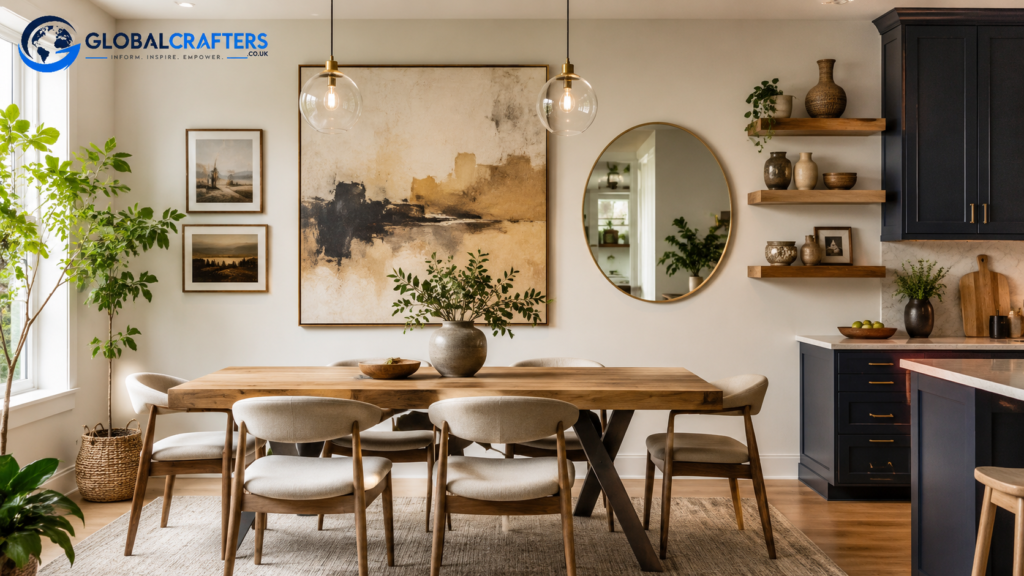

Kitchen wall decor refers to decorative and functional items used to improve the appearance of kitchen walls. Unlike purely decorative rooms, kitchens often combine cooking, dining, storage and social activities, so wall decoration needs to look attractive while remaining practical.
Popular kitchen wall decor includes framed artwork, canvas prints, decorative plates, mirrors, floating shelves, clocks, typography signs, botanical prints, wall baskets, hanging utensils and small plants. The right combination can make an otherwise plain wall feel intentional and connected to the rest of the interior.
Wall decor can also help establish a kitchen’s personality. A contemporary kitchen may benefit from abstract artwork and clean shelving, while a farmhouse kitchen could use wooden signs, botanical artwork and vintage inspired accessories.
The goal is not simply to fill empty wall space. Good kitchen wall decor creates visual balance, adds character and complements existing elements such as cabinets, worktops, flooring, lighting and dining furniture.
Why Kitchen Wall Decor Matters
Kitchen walls are often overlooked because homeowners naturally focus on cabinets, appliances, splashbacks and work surfaces. However, large areas of empty wall can make an otherwise attractive kitchen feel unfinished. Carefully selected decoration can provide the final layer that brings the entire room together.
Decor can also introduce colour and texture without requiring a major renovation. For example, a neutral kitchen can gain warmth through wooden shelves and botanical prints, while a monochrome space can become more interesting with carefully selected artwork.
Another advantage is flexibility. Unlike fitted cabinetry or tiled splashbacks, most wall accessories can be changed relatively easily. This makes kitchen wall decor an affordable way to refresh an interior when your tastes change.
A well-decorated kitchen can also feel more welcoming for family members and guests. Since kitchens frequently become gathering spaces, thoughtful artwork, plants, shelving and decorative objects can create a warmer atmosphere.
How to Choose Kitchen Wall Decor
The best kitchen wall decor should work with the size, layout and existing style of the room. Before purchasing anything, consider the wall you want to decorate and determine whether it is better suited to artwork, shelving, a mirror, plants or a combination of several elements.
Scale is particularly important. A small picture may disappear on a large blank wall, while an oversized piece can overwhelm a compact kitchen. Measure the available space before buying and consider how the decoration will relate to nearby cabinets, furniture and appliances.
Think about practical conditions as well. Kitchens can experience steam, grease, heat and moisture, particularly around cooking areas. Decorative items placed close to a hob or sink may require more frequent cleaning and should be suitable for the environment.
Colour is another major consideration. Your wall decoration does not have to exactly match the kitchen, but it should connect visually with existing colours. Repeating one or two shades from your cabinets, flooring, worktops or accessories can make the room feel cohesive.
Kitchen Wall Decor Ideas for Different Styles
Different interior styles call for different approaches to wall decoration. Rather than copying a trend exactly, use your kitchen’s existing architecture as the starting point and select pieces that reinforce its character.
A successful decorating scheme usually combines different textures and heights. Artwork can provide visual interest, shelves can add dimension, and natural materials can soften hard surfaces. The result should feel collected rather than overcrowded.
Modern Kitchen Wall Decor
Modern kitchens typically benefit from clean lines, restrained colours and carefully selected statement pieces. Large abstract artwork is particularly effective because it can add personality without making the wall look cluttered.
Black and white prints, geometric artwork, minimalist clocks and simple floating shelves can also work well. If the kitchen already contains strong cabinetry or patterned surfaces, choose quieter wall accessories so the room does not become visually overwhelming.
Another approach is to use one large artwork rather than several small decorations. A substantial framed print above a dining table or on a prominent blank wall can become the room’s focal point.
Farmhouse and Rustic Kitchen Decor
Farmhouse kitchen wall decor often focuses on warmth, natural materials and nostalgic details. Wooden signs, vintage style prints, woven baskets and botanical artwork can create a relaxed and welcoming atmosphere.
Open wooden shelving is particularly useful in rustic kitchens. Displaying ceramic bowls, small plants, cookbooks and attractive kitchen accessories can make the wall both decorative and functional.
Avoid making every item look deliberately aged. Combining rustic elements with contemporary pieces can create a more sophisticated appearance while retaining the welcoming character associated with farmhouse interiors.
Minimalist Kitchen Wall Decor
Minimalist kitchens require restraint. Instead of covering every available surface, select a few pieces that have a clear visual purpose.
A single framed print, simple round mirror or narrow floating shelf may be enough for a small wall. Neutral colours, natural wood and uncomplicated shapes can reinforce the minimalist aesthetic.
Negative space is also important. Leaving portions of the wall empty allows the chosen decoration to stand out and prevents the kitchen from feeling crowded.
Traditional Kitchen Decor
Traditional kitchens can accommodate classic framed artwork, decorative plates, botanical illustrations and elegant mirrors. Wooden frames and muted colours often complement traditional cabinetry particularly well.
Consider creating a symmetrical arrangement above a dining area or sideboard. Matching frames can create structure, while slightly different artwork within those frames adds personality.
Industrial Kitchen Decor
Industrial kitchens often combine metal, wood, exposed textures and darker colours. Metal framed artwork, vintage posters, industrial clocks and reclaimed wood shelving can complement this style.
You can soften an industrial kitchen with greenery or warm toned artwork. This prevents the room from becoming too cold while preserving its distinctive character.
Wall Art for the Kitchen
Wall art is one of the simplest ways to introduce personality into a kitchen. Food inspired prints are an obvious choice, but artwork does not need to literally depict food or cooking to work in the space.
Abstract artwork, landscapes, botanical illustrations, photography and typography can all look effective. The important factor is how the artwork relates to the room’s overall palette and proportions.
For a dining wall, consider a large statement print. For a narrow wall between cabinets, a vertical print or small framed collection may be more appropriate.
When selecting artwork, think about durability and maintenance. Framed prints protected by glass or acrylic can be easier to clean than highly textured artwork exposed to kitchen conditions.
Shelves and Display Decor
Floating shelves are among the most versatile kitchen wall decor options because they combine storage and styling. A well designed shelf can display attractive objects while keeping frequently used items accessible.
Try mixing functional and decorative pieces. A shelf might contain ceramics, a small plant, a framed print, a cookbook and one or two carefully selected accessories. Varying heights creates a more natural composition.
Avoid filling shelves from end to end. Leaving some empty space allows individual objects to stand out and creates a lighter appearance.
Wooden shelves can introduce warmth into modern kitchens, while metal shelving may suit industrial interiors. White or neutral shelves can blend into the wall when you want the displayed objects to remain the focus.
Kitchen Signs and Typography
Typography is another popular option for kitchen wall decoration. Words and short phrases can create a casual, welcoming atmosphere, especially in family kitchens and dining spaces.
Rather than choosing generic signs simply because they are labelled as kitchen decor, consider the message, typography and material. A well designed wooden or metal sign can become an attractive design feature.
Large typography should generally be treated as artwork. Give it enough surrounding space so the lettering remains readable and visually impactful.
Mirrors and Reflective Decor
A mirror can be particularly useful when decorating a kitchen with limited natural light or a compact layout. Reflective surfaces can help bounce available light around the room and create the impression of additional depth.
Round mirrors work particularly well against kitchens dominated by straight cabinet lines. The curved shape introduces visual contrast and can make the overall design feel softer.
However, avoid placing a mirror where it reflects an unattractive area. Position it so that it captures light, greenery, artwork or another appealing feature whenever possible.
Plants and Natural Elements
Plants can bring colour and organic texture into a kitchen dominated by hard surfaces such as stone, glass, metal and cabinetry. Small trailing plants can look excellent on floating shelves, while wall mounted planters can make use of vertical space.
Herbs are especially appropriate because they combine decoration with practical value. Depending on the available light, you can display suitable kitchen herbs near a window or another bright location.
If natural plants are difficult to maintain, high quality artificial greenery can provide a similar visual effect. Keep artificial plants clean because dust can quickly make them look less realistic.
Natural wood, woven baskets, rattan accessories and ceramic pieces can also add organic texture without requiring plant care.
Functional Kitchen Wall Decor
The best kitchen wall decor does not always have to be purely decorative. Functional wall accessories can improve organisation while contributing to the room’s appearance.
A wall mounted rail can hold utensils, while hooks can provide space for mugs, aprons or lightweight kitchen accessories. Attractive storage containers can also become part of the visual design when displayed intentionally.
A large kitchen clock is another example of practical decoration. It provides a useful function while filling a substantial area of empty wall.
The key is to make functional items look intentional. Avoid turning decorative walls into cluttered storage areas. Group useful objects neatly and maintain enough empty space to preserve visual balance.
Kitchen Wall Decor for Small Spaces
Small kitchens benefit from decoration that uses vertical space without consuming valuable floor or worktop area. Slim shelves, compact artwork and wall mounted accessories are particularly useful.
Mirrors can help create visual depth, while light coloured artwork can maintain an airy atmosphere. A single vertical print may work better than a collection of small pieces if the wall is narrow.
Be selective with accessories. Too many decorative items can make a small kitchen feel crowded, even if each individual piece is attractive.
You can also use the area above a dining bench, breakfast table or small sideboard as a dedicated decorating zone. This creates a focal point without interfering with cooking areas.
Kitchen Wall Decor by Wall Type
Not every kitchen wall should be decorated in the same way. A large uninterrupted wall provides more opportunities for statement artwork, while a narrow strip may require a more compact solution.
Walls near cooking areas need particular attention because grease and heat can make some materials difficult to maintain. Keep delicate artwork and porous accessories away from areas exposed to cooking splashes wherever practical.
Dining area walls are usually more suitable for decorative features because they experience fewer cooking related contaminants. This makes them ideal locations for gallery walls, mirrors and statement artwork.
Empty walls between cabinets can also benefit from small framed prints or narrow shelving, provided they do not interfere with doors, appliances or normal movement.
How to Create a Balanced Gallery Wall
A gallery wall can transform a large empty kitchen wall into an engaging focal point. It works especially well above dining tables, breakfast areas and sideboards.
Start by selecting a common visual connection between the pieces. This could be a colour palette, frame style, subject matter or artistic style. The individual pieces do not have to match perfectly.
Before hanging anything, arrange the artwork on the floor or create paper templates and position them on the wall. This makes it easier to experiment with spacing and composition.
Keep the overall arrangement connected to nearby furniture. A gallery wall that is too wide or too narrow compared with the table or sideboard beneath it can feel unbalanced.
Kitchen Wall Decor Colour Ideas
Colour should support the existing kitchen rather than compete with it. If your cabinets and worktops are neutral, wall art can introduce stronger accent colours.
For colourful kitchens, neutral artwork can provide visual relief. Black, white, beige, natural wood and muted botanical tones can work particularly well when the room already contains several strong colours.
Repeating colours is an effective design technique. For example, artwork might contain the same warm wood or green tones already present in cabinets, plants or accessories.
Texture also influences how colour is perceived. A woven basket, ceramic plate and wooden frame may all have similar colours but create very different visual effects because of their materials.
Common Decorating Mistakes
One common mistake is choosing too many small accessories. Individually attractive pieces can become visually distracting when grouped without a clear composition.
Another mistake is ignoring scale. A tiny print on a huge wall can appear accidental, while an oversized arrangement in a narrow kitchen can make the room feel crowded.
Poor placement can also reduce practicality. Wall decor should never obstruct cabinet doors, switches, lighting, ventilation or normal kitchen movement.
Finally, avoid following trends so closely that the kitchen loses its personality. The most successful interiors usually combine current ideas with timeless pieces that reflect the people who use the space.
How to Keep Kitchen Wall Decor Clean
Kitchen environments naturally produce dust, steam and grease, so maintenance should be considered before installing wall decoration. Smooth, wipeable surfaces are generally easier to maintain than highly textured materials.
Frames and mirrors can usually be cleaned with appropriate soft cloths and suitable cleaning products. Always follow the care instructions provided with the specific material.
Shelves require regular dusting, particularly when they hold decorative objects. If you display ceramics or containers, occasionally remove the items and clean the shelf surface thoroughly.
Avoid spraying cleaning products directly onto artwork, wood or delicate decorative materials. Applying an appropriate cleaner to a cloth first can provide greater control and reduce the risk of damage.
Latest Kitchen Wall Decor Trends
Current kitchen interiors increasingly favour personalised decoration rather than generic matching accessories. Homeowners are using artwork, vintage inspired objects, handmade ceramics and natural materials to create spaces that feel more individual.
Large-scale artwork is also increasingly useful for creating a focal point. Instead of filling a wall with numerous small decorations, one carefully selected statement piece can provide stronger visual impact.
Natural textures remain popular as well. Wood, rattan, woven materials, ceramics and greenery can soften modern kitchens and create contrast against sleek cabinetry.
Another important direction is multifunctional design. Shelving, rails, hooks and wall mounted storage can contribute to the kitchen’s appearance while improving everyday organisation.
Reviews and Buying Considerations
When reviewing kitchen wall decor, look beyond appearance. Material quality, dimensions, mounting requirements, maintenance and suitability for the kitchen environment all matter.
For framed artwork, examine the frame construction and protective covering. For shelves, consider their weight capacity and mounting method. For mirrors, check whether the supplied hardware is appropriate for your wall type.
Customer reviews can be helpful when buying online, especially for assessing colour accuracy, product quality, packaging and installation. However, photographs can sometimes make products appear larger or smaller than they really are, so always check the listed dimensions.
It is also worth considering the long term visual appeal of an item. Trend led accessories can be fun, but timeless artwork, quality frames and natural materials may provide better value because they can remain attractive even when the rest of the kitchen changes.
Conclusion
Kitchen wall decor is an effective way to give a kitchen more personality, warmth and visual interest without undertaking a major renovation. From statement artwork and mirrors to floating shelves, plants and functional storage, there are options for virtually every kitchen size and interior style.
The most successful approach is to consider the entire room before choosing individual pieces. Think about scale, colour, texture, maintenance and practicality, then select decoration that complements the existing cabinets, worktops, lighting and furniture.
You may also read more blogs
Frequently Asked Questions
What is the best kitchen wall decor?
The best kitchen wall decor depends on the kitchen’s style, wall size and practical requirements. Popular options include framed artwork, floating shelves, mirrors, botanical prints, decorative plates and functional wall storage.
A good choice should complement existing colours and furniture without creating unnecessary clutter. In many kitchens, a combination of one statement piece and a few smaller accessories works better than filling every wall.
What can I put on a blank kitchen wall?
A blank kitchen wall can accommodate artwork, shelves, a gallery wall, a large mirror, a clock, decorative plates, plants or functional storage accessories.
Consider the wall’s location first. A dining area wall can support more delicate decorative items, while a wall near cooking activity should use materials that are easier to clean and maintain.
How can I decorate a kitchen wall cheaply?
Affordable kitchen wall decor can include printable artwork, second hand frames, small plants, DIY shelves, decorative plates and repurposed wooden objects.
You can also refresh existing decor by changing frames, rearranging shelves or creating a new gallery wall composition rather than purchasing an entirely new collection.
What wall art looks good in a kitchen?
Abstract artwork, botanical illustrations, food photography, landscapes, typography and minimalist prints can all work well in kitchens.
Choose artwork according to the room’s colour palette and scale. A large kitchen usually benefits from larger artwork, while compact kitchens may look better with smaller or vertically oriented pieces.
Are mirrors suitable for kitchen walls?
Yes, mirrors can work very well on kitchen walls. They can introduce a decorative focal point and help reflect light, potentially making a compact or darker room feel more spacious.
Round mirrors are especially useful for contrasting with the straight lines of cabinetry and worktops.
How do I decorate a small kitchen wall?
Use vertical and space efficient solutions such as narrow shelves, compact artwork, small mirrors and wall mounted plants.
Avoid excessive decoration. A carefully positioned statement piece can have greater impact than several small objects competing for attention.
Should kitchen wall decor match the cabinets?
Kitchen wall decor does not need to match the cabinets exactly. Instead, aim for visual coordination through complementary colours, materials and shapes.
Repeating one or two colours from the cabinetry or accessories can help connect the decor with the rest of the kitchen without making everything look identical.
How do I make kitchen wall decor look expensive?
Focus on scale, simplicity and quality rather than quantity. A large, well proportioned artwork, attractive frame or carefully styled shelf can look more sophisticated than many inexpensive accessories.
Use consistent colours and leave enough negative space around decorative pieces. Good arrangement often has a greater visual impact than the price of individual items.