
Dining room wall decor refers to the artwork, mirrors, shelving, colours, textures, photographs, decorative objects and architectural details used to enhance the walls surrounding a dining area. It can range from a single large painting to a carefully arranged gallery wall, depending on the size, style and purpose of the room.
The walls of a dining room provide an excellent opportunity to introduce personality without changing the main furniture. A suitable piece of wall art, an elegant mirror or a carefully selected accent colour can completely change the atmosphere of the space. Even a simple dining area can feel more finished when the walls are thoughtfully decorated.
Good dining room wall decor should complement the dining table, chairs, lighting and overall interior style rather than competing with them. The best design choices create visual harmony while giving the room a distinctive identity.
Why Is Dining Room Wall Decor Important?
Dining rooms are often used for more than everyday meals. They can become places for family gatherings, dinner parties, celebrations, conversations and special occasions. Because of this, the visual atmosphere of the room can have a meaningful effect on how comfortable and welcoming it feels.
Decorating the walls also allows homeowners to make better use of vertical space. Instead of relying entirely on furniture and accessories placed on the floor or dining table, wall decoration adds another visual layer. This is especially useful in smaller dining areas where floor space may be limited.
Another advantage is flexibility. Wall decor can usually be changed more easily than furniture or flooring. Updating artwork, repainting an accent wall or replacing decorative shelves can refresh the entire room without requiring a major renovation.
How to Choose the Right Dining Room Wall Decor
Before buying anything, consider the size and shape of your dining room. A large empty wall can support an oversized artwork, a collection of framed prints or a substantial mirror, while a narrow wall may look better with one vertical piece or a small arrangement.
The existing interior style should also influence your choices. A contemporary dining room may suit abstract artwork, geometric mirrors and minimalist shelving, while a traditional room could benefit from classic paintings, framed botanical prints or decorative plates.
Colour is equally important. Wall decor does not necessarily need to match the dining furniture exactly. Instead, look for complementary shades that already appear elsewhere in the room. Pulling a colour from the curtains, rug, tableware or upholstery can make the entire space feel coordinated.
Modern Dining Room Wall Decor Ideas
Modern dining room wall decor often focuses on simplicity, clean lines and carefully selected statement pieces. Rather than covering every available surface, modern interiors typically use fewer decorative elements but give each one greater visual importance.
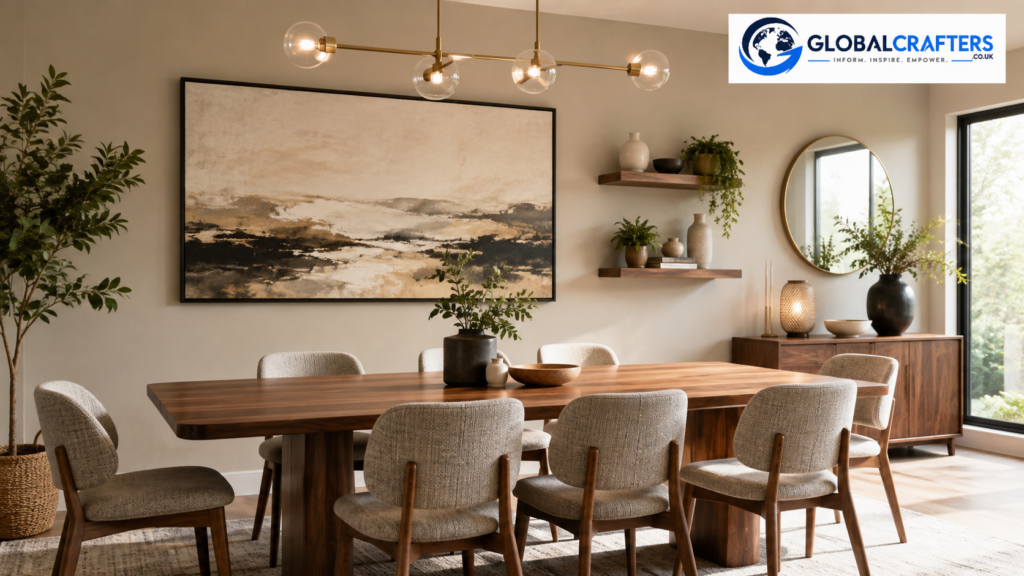
Large abstract artwork is a popular option for a modern dining area. A single oversized canvas above the dining table can act as the room’s focal point without making the wall feel cluttered. Neutral abstract designs can work particularly well when the furniture already has strong shapes or textures.
Another modern option is a large round or organically shaped mirror. Curved forms can soften a dining room filled with rectangular furniture, while reflective surfaces can help distribute light and create the impression of greater space.
Dining Room Wall Art for a Strong Focal Point
Wall art is one of the easiest ways to give a dining room character. The right artwork can establish a colour palette, introduce personality and create a natural focal point around the dining table.
When selecting dining room wall art, consider the visual relationship between the artwork and the table. A piece that is too small may disappear against a large wall, while artwork that is too large can overwhelm the furniture. As a general design principle, the artwork should feel proportionate to the wall and the furniture beneath it.
You can also create a more personal atmosphere by displaying photography, travel prints, family photographs or artwork created by local artists. Personal pieces often make a dining room feel less like a showroom and more like a lived in home.
Create a Gallery Wall
A gallery wall can transform a plain dining room into an expressive and visually interesting space. It allows you to combine several smaller artworks rather than relying on one large statement piece.
For a coordinated appearance, choose frames that share a common characteristic, such as the same colour or material. The artwork itself can still vary. Botanical illustrations, photographs, abstract prints and typography can work together when they share a consistent colour palette.
Before putting hooks into the wall, arrange the frames on the floor or create paper templates and place them on the wall with removable tape. This makes it easier to experiment with spacing and composition.
Use Mirrors to Enhance the Dining Area
Mirrors are both decorative and functional, making them especially useful for dining room wall decoration. A strategically positioned mirror can reflect natural or artificial light and make the room feel brighter.
A large mirror positioned on the main dining wall can also become a statement feature. Round mirrors are particularly effective in rooms dominated by straight lines, while rectangular mirrors can reinforce a more structured contemporary aesthetic.
Think carefully about what the mirror will reflect. A mirror facing an attractive light fixture, artwork, window or architectural feature can enhance that element. However, reflecting clutter or an unattractive area can have the opposite effect.
Add Floating Shelves
Floating shelves offer a practical way to decorate dining room walls while creating additional display space. They can hold plants, books, ceramics, candles, framed photographs and other decorative objects.
The key to attractive shelf styling is balance. Avoid filling every inch of the shelf. Leave some empty space between objects and vary their heights to create a more natural composition.
Wooden shelves can introduce warmth into contemporary dining rooms, while metal shelving may work well with industrial interiors. Painted shelves can also blend seamlessly into the wall for a more minimalist appearance.
Create a Dining Room Accent Wall
An accent wall can provide a dramatic transformation without requiring every wall to be redesigned. Paint is the simplest approach, but wallpaper, wood panelling, textured finishes and decorative moulding can also create an impressive feature.
Deep greens, warm terracotta, navy, charcoal and earthy neutrals can create a sophisticated dining environment. Lighter shades, meanwhile, can help smaller dining spaces feel open and airy.
If you prefer subtle decoration, consider an accent wall in a slightly deeper version of the room’s existing colour. This creates visual depth while maintaining a cohesive appearance.
Try Wallpaper for More Personality
Wallpaper can introduce patterns, textures and colours that would be difficult to achieve with artwork alone. Botanical patterns, subtle geometric designs, textured neutrals and classic motifs can all work well in dining spaces.
For a sophisticated result, consider using wallpaper on one feature wall rather than covering the entire room. This allows the pattern to make an impact without becoming overwhelming.
When choosing patterned wallpaper, consider the furniture and lighting already present. A heavily patterned wall may need simpler furniture and accessories, while a subtle wallpaper design can provide a background for more expressive artwork.
Bring Nature Into the Dining Room
Nature inspired dining room wall decor can make the space feel relaxed and welcoming. Botanical artwork, framed leaves, landscape photography and natural textures can introduce an organic quality.
Living plants can also be displayed on wall mounted shelves or plant holders, provided the location receives suitable light and the plants are appropriate for indoor conditions.
Wood, rattan, woven materials and natural fibres can reinforce this theme. Combining natural wall decor with neutral furniture can create a calm dining environment that feels warm rather than overly formal.
Minimalist Dining Room Wall Decor
Minimalism is not about leaving every wall completely empty. Instead, it focuses on choosing fewer items and giving each one enough space to make an impact.
A single large artwork, understated mirror or carefully positioned shelf can be enough to decorate a minimalist dining room. Neutral colours and simple frames can help maintain a clean appearance.
The advantage of this approach is that the dining table and lighting fixture remain visually important. The wall decor supports the room instead of competing with its central features.
Rustic and Farmhouse Dining Room Wall Decor
Rustic dining rooms often benefit from materials and decorative pieces that introduce warmth and texture. Wooden signs, vintage inspired artwork, woven baskets, distressed frames and antique style mirrors can all contribute to the look.
A large reclaimed wood feature can become a statement wall element, particularly when paired with a simple dining table and warm lighting. However, rustic design does not mean every item needs to look aged.
Modern farmhouse interiors often combine traditional materials with cleaner shapes and neutral colours. This creates a comfortable style that feels contemporary while retaining a sense of warmth.
Elegant and Luxury Dining Room Wall Decor
For an elegant dining room, focus on quality, proportion and visual restraint. A large framed artwork, sophisticated mirror or decorative wall moulding can create a polished appearance without excessive decoration.
Metallic finishes can also add a subtle sense of luxury. Gold, brass or brushed metal frames may work particularly well with warm lighting and neutral wall colours.
Lighting deserves special attention in an elegant dining space. Wall sconces positioned around artwork or a mirror can create layers of light and make the wall decoration more visually prominent in the evening.
Small Dining Room Wall Decor Ideas
Small dining rooms require careful planning because excessive decoration can make the space feel crowded. Instead of using many small objects, consider one or two pieces with strong visual impact.
Mirrors are particularly useful in compact dining areas because they can create a greater sense of openness. A vertically oriented artwork can also draw the eye upward and make the room feel taller.
Wall mounted shelves are another useful solution. They provide display space without consuming valuable floor area, making them suitable for apartments, breakfast areas and compact dining rooms.
Budget Friendly Dining Room Wall Decoration
You do not need an expensive renovation to create attractive dining room wall decor. One of the most affordable options is to print artwork yourself and place it in inexpensive frames.
A collection of coordinated prints can look sophisticated when arranged with consistent spacing. You can also repurpose existing frames by replacing their contents with new artwork.
Paint is another cost effective way to create a dramatic change. A feature wall can completely alter the character of a dining room while requiring relatively little material compared with more extensive decorating projects.
DIY Dining Room Wall Decor Ideas
DIY projects can add personality and make the dining room feel more individual. Hand painted abstract artwork, pressed botanical displays, handmade shelves and personalised photo arrangements are all possibilities.
You can also create a decorative plate wall using plates in complementary colours and patterns. This approach can be particularly effective in traditional, cottage, Mediterranean or eclectic interiors.
Before beginning a DIY project, consider durability and maintenance. Dining areas can experience food splashes, moisture and frequent activity, so wall decorations should be easy to clean and securely installed.
How to Coordinate Wall Decor With Dining Furniture
The dining table is usually the visual centre of the room, so wall decoration should relate to its shape and proportions. A long rectangular table may look balanced beneath a wide horizontal artwork, while a round table can pair beautifully with a circular mirror or vertically arranged artwork.
Chair materials can also influence wall decor. Wooden chairs may look natural alongside botanical prints or woven textures, while upholstered chairs can provide an opportunity to repeat fabric colours through artwork.
The lighting fixture should also be considered. If you have a dramatic chandelier or pendant light, avoid placing overly busy decoration directly behind it. Instead, use wall decor to frame or complement the lighting feature.
Consider the Dining Room Colour Scheme
Colour coordination is one of the simplest ways to make wall decor look intentional. Select one or two colours from the existing room and repeat them in artwork, frames, accessories or textiles.
For neutral dining rooms, wall art can introduce stronger colours. For colourful rooms, more restrained artwork may prevent the space from becoming visually overwhelming.
Warm colours such as terracotta, mustard and muted red can create an intimate atmosphere, while greens and blues may provide a calmer feeling. Soft neutrals are versatile and can support almost any decorating style.
Make Use of Architectural Details
Wall moulding, panelling and decorative trim can provide texture even when no artwork is present. These features can make a dining room feel more sophisticated and add architectural interest to otherwise plain walls.
Picture frame moulding can be painted the same colour as the wall for a subtle contemporary effect or contrasted with the wall colour for a more traditional appearance.
Vertical wood panelling can add height and texture, while horizontal panelling may make a narrow room feel visually wider. The appropriate choice depends on the room’s proportions and overall design style.
Create a Feature Around the Dining Table
The wall directly behind or beside the dining table is often the best location for a decorative focal point. This is naturally where people’s attention tends to go when they sit down.
A large painting, mirror, gallery wall or decorative panel can anchor the dining area and visually connect the table to the surrounding room.
However, make sure the wall feature does not interfere with seating, movement or lighting. Decorative pieces should be securely mounted and positioned at a comfortable viewing height.
Common Dining Room Wall Decor Mistakes
One common mistake is choosing artwork that is too small for the available wall. Several tiny pieces can sometimes work, but a single undersized frame in the centre of a large empty wall can make the entire arrangement feel disconnected.
Another issue is overcrowding. Adding artwork, mirrors, shelves, plants and decorative objects to every wall can make an otherwise attractive room feel chaotic. Good design includes empty space.
Poor positioning can also reduce the impact of wall decor. Artwork that is hung too high may feel disconnected from the dining furniture, while pieces positioned too low can interfere with chairs or everyday activity.
How to Create a Balanced Dining Room Wall
Balance does not necessarily mean perfect symmetry. It means that the visual weight of the objects feels evenly distributed throughout the composition.
For example, a large artwork on one side of a wall might be balanced by two smaller framed pieces on the other side. Different objects can work together when their colours, shapes or materials create a relationship.
Step back regularly while decorating. A wall may look balanced when viewed closely but appear too heavy from across the room. Looking at the entire dining area helps you understand how the decor interacts with the furniture and lighting.
Seasonal Dining Room Wall Decor
Changing wall decoration seasonally can refresh the dining room without requiring a complete redesign. Spring might inspire botanical artwork and lighter colours, while autumn can introduce earthy tones and warm textures.
During holidays and celebrations, temporary decorative pieces can be added around existing artwork. Garlands, wreaths and seasonal prints can provide festive character without permanently changing the room.
Keep seasonal decorating controlled. A small number of well selected pieces usually looks more sophisticated than covering every surface with themed decorations.
Dining Room Wall Decor for Different Interior Styles
Every interior style has its own approach to wall decoration. Contemporary spaces often favour abstract art and minimalist compositions, while traditional dining rooms may use classic artwork, framed prints and decorative mirrors.
Industrial dining rooms can incorporate metal artwork, exposed textures and vintage inspired signs. Coastal interiors may benefit from soft blues, natural materials and landscape artwork.
Eclectic rooms provide greater freedom. Different frames, colours, patterns and objects can be mixed, provided there is some underlying connection that keeps the overall design cohesive.
How to Keep Dining Room Wall Decor Practical
A beautiful wall should also be practical. Dining areas can experience food stains, dust and regular movement, so easy to maintain surfaces and secure installations are important.
Avoid placing fragile objects where they could easily be knocked by chairs or people moving around the table. Heavy mirrors and shelves should be installed using appropriate wall fixings.
Consider cleaning requirements before choosing textured or heavily detailed decorations. Items that collect dust may require more frequent maintenance than smooth framed artwork or washable painted walls.
Conclusion
Dining room wall decor is one of the easiest ways to transform an ordinary dining area into a space that feels complete, comfortable and personal. From statement artwork and elegant mirrors to gallery walls, shelves, accent colours and natural textures, there are countless ways to make an empty wall work harder for your interior.
The most successful approach is not necessarily to add more decoration. Instead, focus on choosing pieces that suit the scale of the room, complement the dining furniture and support the atmosphere you want to create. A carefully selected artwork can be more effective than an overcrowded collection of accessories.
You may also read more blogs
Small Pewter Desk for Bedroom 2ft Wide
Frequently Asked Questions About Dining Room Wall Decor
What should I put on my dining room wall?
Popular choices include large artwork, mirrors, gallery walls, shelves, botanical prints, decorative plates, photographs and accent wall treatments. The best option depends on the room’s size, furniture and decorating style.
A large empty wall often benefits from one substantial focal point, while smaller walls may suit a compact collection of coordinated pieces.
How do I decorate a large dining room wall?
Large walls can accommodate oversized artwork, gallery walls, large mirrors, wall panelling or a combination of decorative elements.
Avoid using several pieces that are too small and widely separated. Grouping smaller pieces into a cohesive arrangement can help them visually occupy the available space.
What is the best wall art for a dining room?
The best dining room wall art is artwork that complements the room’s colours, furniture and overall personality. Abstract artwork, botanical prints, landscapes, photography and personalised pieces are all popular choices.
Consider scale carefully. Artwork should generally feel proportionate to the wall and the furniture beneath it.
Are mirrors good for dining room walls?
Yes. Mirrors can be both attractive and functional. They can reflect light and make a dining area appear brighter or more spacious.
Positioning is important because the mirror should ideally reflect an attractive feature rather than clutter or an undesirable view.
How can I decorate a small dining room wall?
For a small dining room, choose space efficient decorations such as a mirror, one statement artwork, a vertical gallery arrangement or floating shelves.
Keeping the colour palette controlled can also prevent the room from feeling visually crowded.
What colours work well for dining room walls?
Warm neutrals, earthy greens, deep blues, terracotta, soft greys and creamy whites can all work well. The best colour depends on natural light, furniture and the atmosphere you want to create.
For a sophisticated look, consider using one dominant wall colour with complementary shades in the artwork and accessories.
How high should dining room artwork be hung?
Artwork should generally be positioned so that it can be viewed comfortably while seated and standing. It should also relate visually to the furniture beneath it.
Rather than focusing only on a fixed measurement, consider the height of the dining table, the size of the artwork and the proportions of the wall as a whole.
How can I decorate a dining room wall cheaply?
Affordable options include printable artwork, DIY paintings, repurposed frames, removable wallpaper, thrifted mirrors and simple floating shelves.
A fresh coat of paint can also make a major difference without requiring a large decorating budget.